
Driving Around Oman: What to Know Before You Go

We spent 10 days driving ourselves around Oman in October 2019, and it’s a country built for a road trip. The highways are good, fuel is cheap, and the best parts sit well outside Muscat: canyons in the Hajar Mountains, abandoned mud-brick villages, and wadis you swim through.
We drove from Muscat inland to Jabal Akhdar and the towns at the foot of the mountains, and along the coast to Wadi Shab. We did not get east to the Wahiba Sands or south to Salalah, so you won’t find advice on either here.
These are the things we’d tell a friend before they picked up a rental car in Muscat.
Is Oman safe to visit right now?

Check your government’s travel advisory before you book, because the answer has changed. As of October 2026 the U.S. State Department rates Oman Level 3: Reconsider Travel, citing the risk of armed conflict and terrorism since hostilities between the United States and Iran began in February 2026. The Yemen border area is Level 4: Do Not Travel.
Day to day, Oman is a low-crime country, and the same State Department page describes street crime as minimal. We had a wonderful time when traveling around the country, but we’d hold off on plans at the moment.
Regional advisories move faster than a blog post, and a Level 3 rating can affect your travel insurance. Read the current advisory and your policy before you commit to flights.
Rent a car, and drive defensively
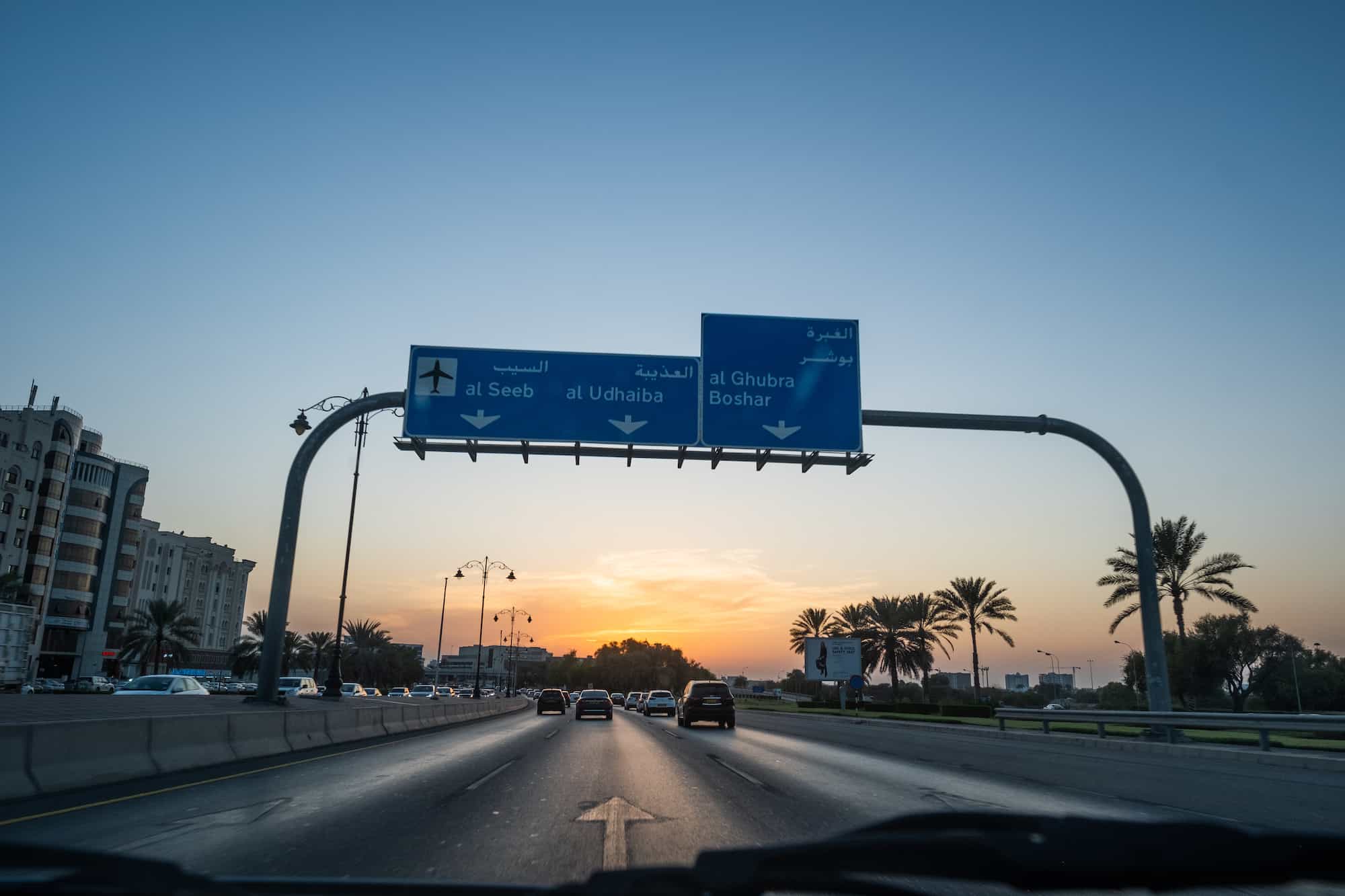
You need a car to see Oman properly. Public transport is thin outside Muscat, and most of the places worth seeing are a day trip or a one-night stop apart.
- Speed cameras are everywhere. The highways are lined with them, and the top limit is 120 km/h. Our rental beeped at us every time we went over it.
- Local driving is fast. Expect tailgating and quick lane changes on the highways. Leave room and let people pass.
- Watch for camels and donkeys. We saw them constantly, including one donkey standing in the middle of a four-lane highway. A camel at speed can kill you, so we avoided driving outside towns after dark.
- Bring an International Driving Permit alongside your home license.
- Fuel is cheap. Prices are set by the government each month and attendants fill the tank for you.
Do you need a 4×4 in Oman?
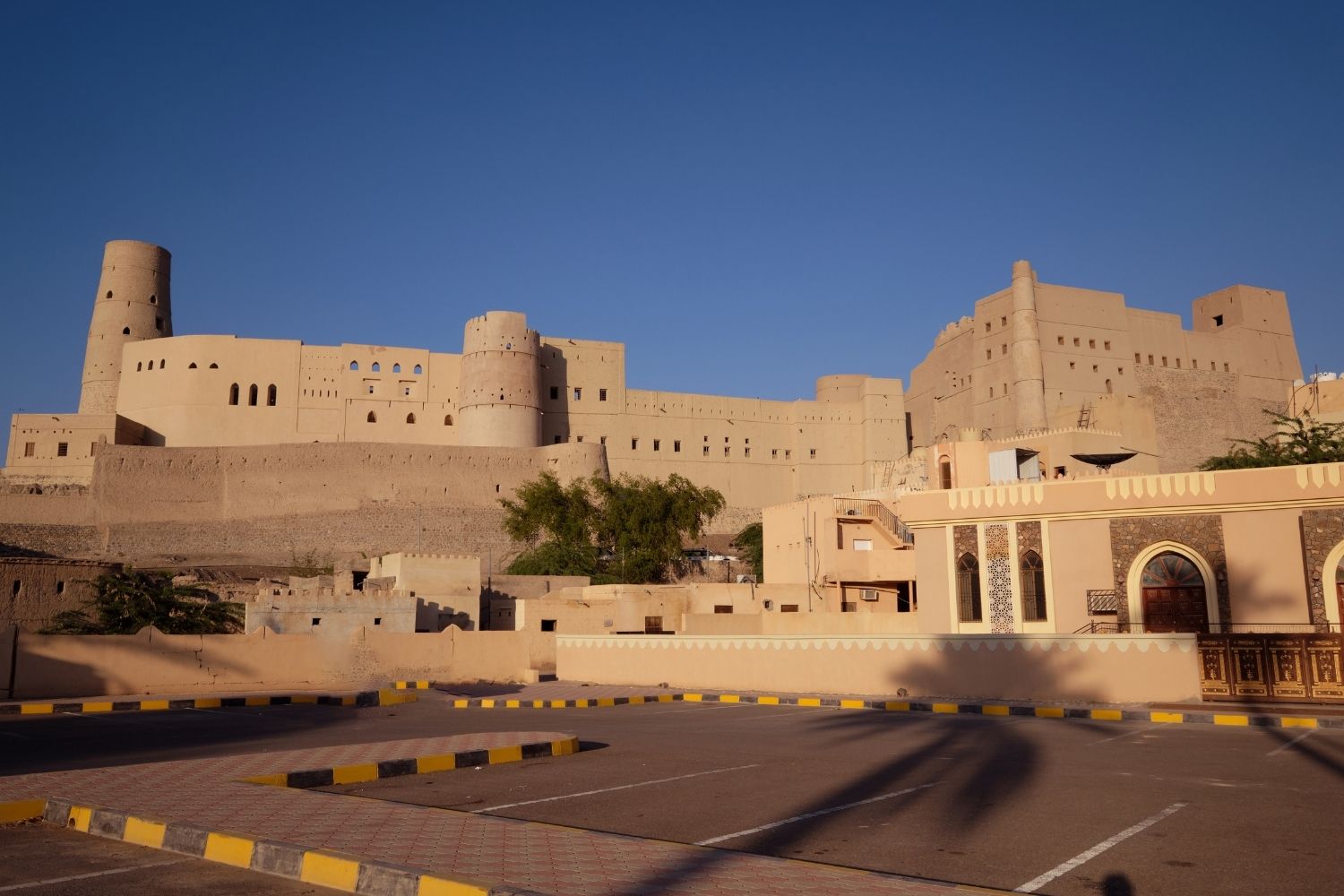
You need one for Jabal Akhdar, and that rule is enforced. There is a Royal Oman Police checkpoint at Birkat Al Mouz, at the bottom of the mountain road, where officers check your license and that the car’s registration says 4×4.
The road up is paved the whole way. The rule exists because of the gradient, and it’s the descent that punishes a small car’s brakes. If you arrive in a 2WD, the mountain hotels can arrange a transfer from the checkpoint, where you leave your car.
For the highways and main roads between Muscat, Nizwa and the coast, a regular car is fine. A 4×4 earns its cost if you want the mountains or the rougher tracks into wadis and villages.
Head for the mountains

The Hajar Mountains were the best part of our trip, and the only real escape from the coastal heat. It was over 30°C with 80% humidity in Muscat when we visited in October; up at Jabal Akhdar the air was cool and dry.
The landscape is ochre rock cut by deep canyons, with terraced orchards and villages on the rims. Those orchards grow the pomegranates and the roses for the rose water you’ll see sold across the country.
Do the via ferrata
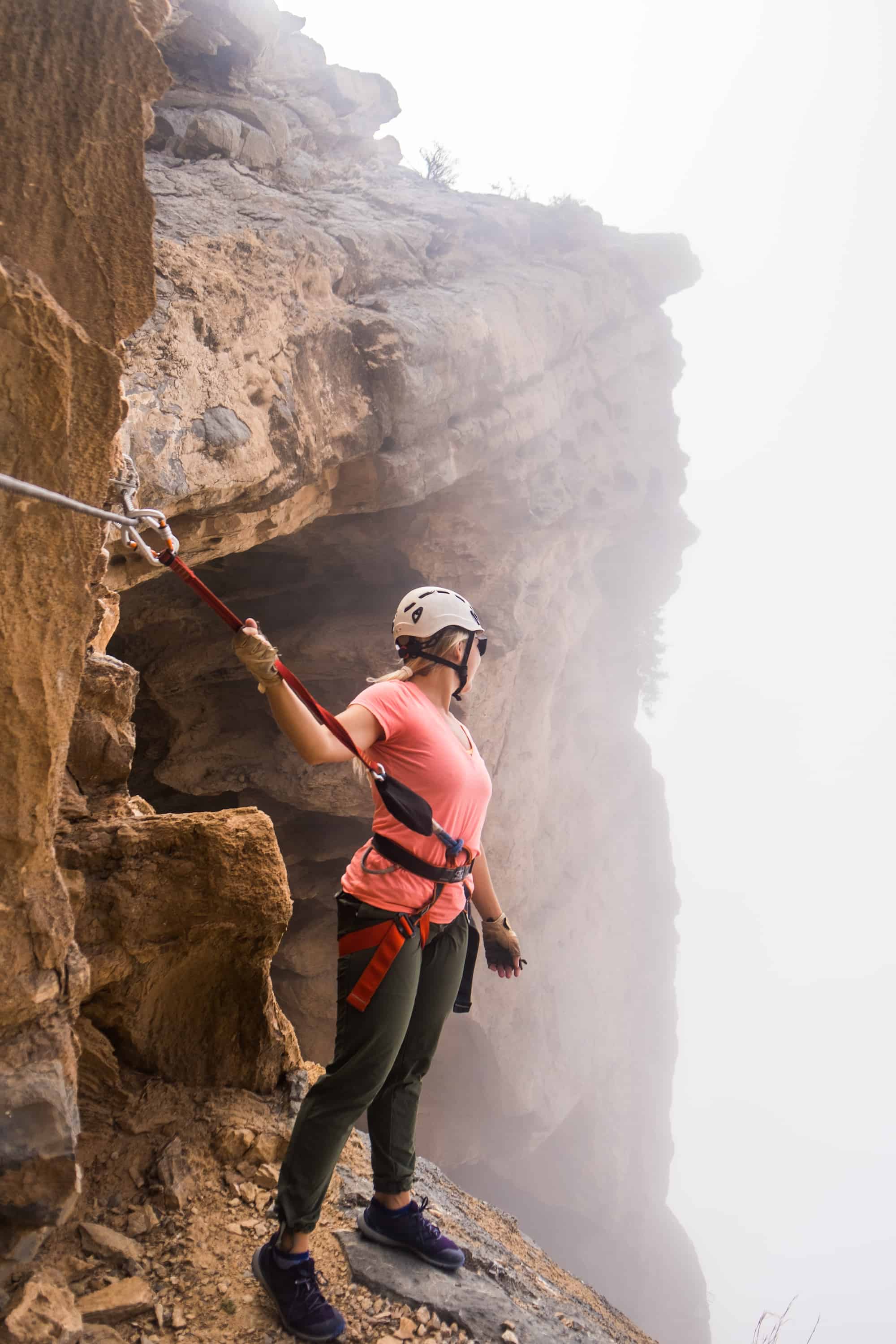
A via ferrata is a climbing route fitted with fixed cables, rungs and ladders, and you stay clipped to the cable the whole way. You don’t need climbing experience. We did the route at Alila Jabal Akhdar, which runs along the canyon wall below the hotel.
We’ve done a number of via ferattas and found it to be a very approachable adventure, as long as you’re not deathly afraid of heights. There are also marked hiking trails along the canyon rim around the hotel, for those who prefer their feet on solid ground.
Stop at Al Hamra

Al Hamra, at the foot of the mountains, has an abandoned old quarter of stone, clay and straw houses, some three storeys high and around 400 years old. Families left them for modern homes with electricity and air conditioning as the oil economy grew, and the old houses were left standing. It’s the best known of several abandoned villages in the region and easy to pair with the drive up the mountain.
Swim through Wadi Shab

Wadi Shab is the wadi to do if you only have time for one. You walk up the valley floor, crossing back and forth over the river, then swim the last stretch into a cave with a waterfall inside. It’s got some awesome cliff jumping into the crystal clear waters there too.

On the coast, keep swimwear for the resorts. At public beaches and wadis, dress as modestly as you would in town.
What we skipped

Ten days was not enough for the whole country, and two big pieces are missing from our trip.
- The Wahiba Sands. The dune desert east of Muscat, where most desert camps are. We never drove that far east.
- Salalah. The far south, known for turning green during the summer monsoon. It was much further than we ventured.
Both need more time than we had. If dunes or the south matter to you, plan for them from the start instead of trying to squeeze them in.
The practical stuff
Money and costs

The Omani rial is pegged at about $2.60, which makes prices look smaller than they are. A drink listed at 3 rials is nearly $8, as we found out with one non-alcoholic cocktail.
We took out about 100 rials for 10 days for the two of us and it was more than enough, because cards were accepted almost everywhere. Cash covered entry tickets, tips, and the souq.
Oman gets expensive if you eat and sleep at resorts every night. In 2019 we found plain rooms under $100 a night and ate at local restaurants for under $5 a person, which balanced out the splurges.
What to wear

Dress modestly. Omani men wear a long white dishdasha and women usually an abaya and headscarf; visitors are not expected to match that, but covered shoulders and knees are. We both wore long, loose pants with a long-sleeve technical shirt or a t-shirt, and it was also the most comfortable thing in the heat.
Coffee, dates and frankincense

Omani coffee, qahwa, is brewed with cardamom, cloves and rose water and poured black into small cups, with dates on the side for sweetness. It’s offered as a welcome, and it was one of our favourite parts of the trip.
Frankincense is the souvenir to bring home. It’s the dried sap of a tree that grows in Oman, and we bought ours at Mutrah Souq in Muscat.
When to go
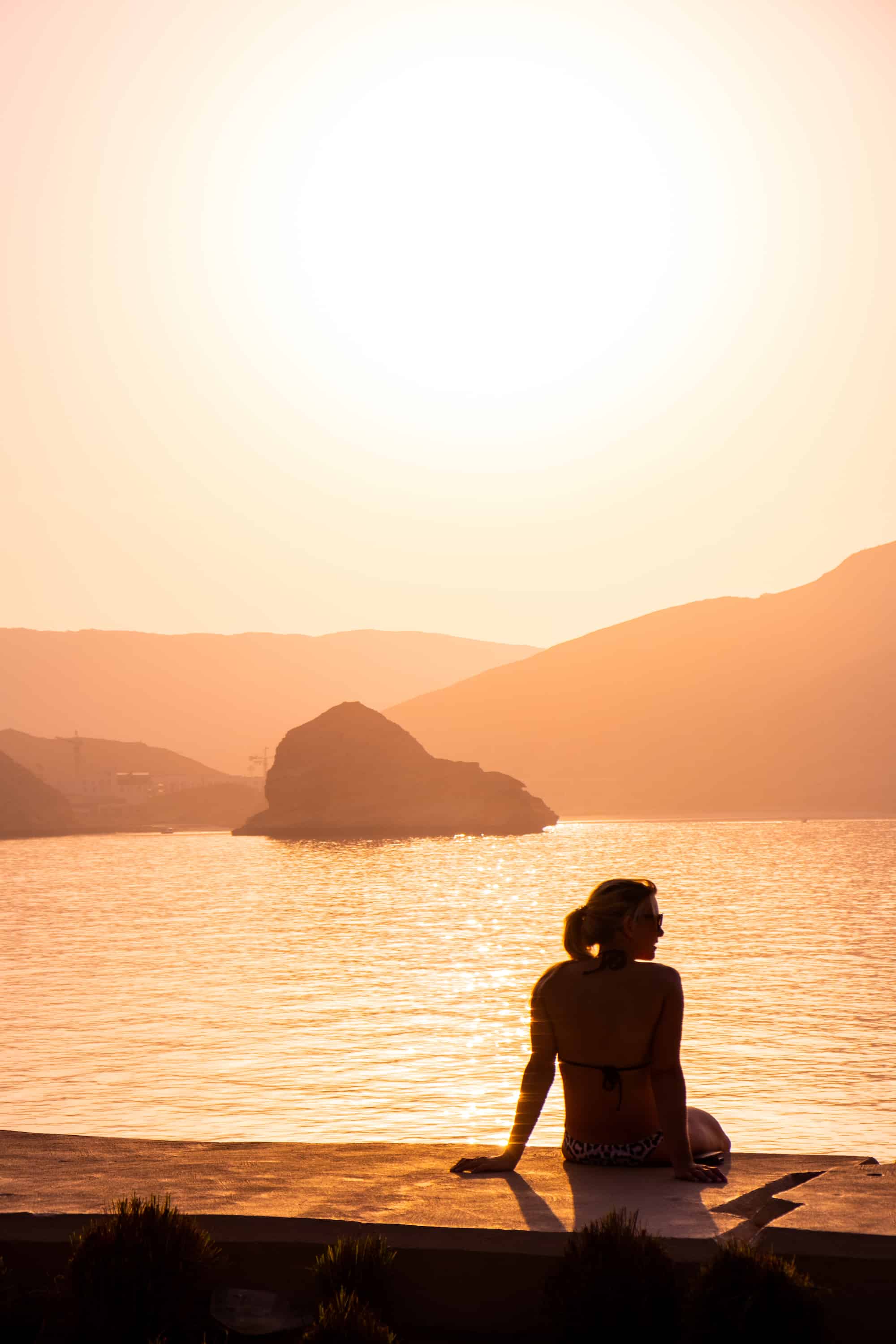
We went in October and the coast was still over 30°C with 80% humidity. The humidity surprised us more than the heat. The mountains and the water were the only relief, so plan your days around one or the other.
Visas

Citizens of more than 100 countries, including the U.S., Canada, the U.K. and most of the EU, can enter visa-free for up to 14 days. You need six months left on your passport, a return ticket, a hotel booking and health insurance. Longer stays need an e-visa. Oman changed its visa categories in August 2026, so confirm on the Royal Oman Police site before you fly.
Where we stayed
We booked and paid for all three of these ourselves.
- Alila Jabal Akhdar. Our favourite stay in Oman. It sits on the rim of a canyon in the Hajar Mountains, with the via ferrata, hiking trails and a spa on site. The Omani food here was the best we had in the country. It is not cheap.
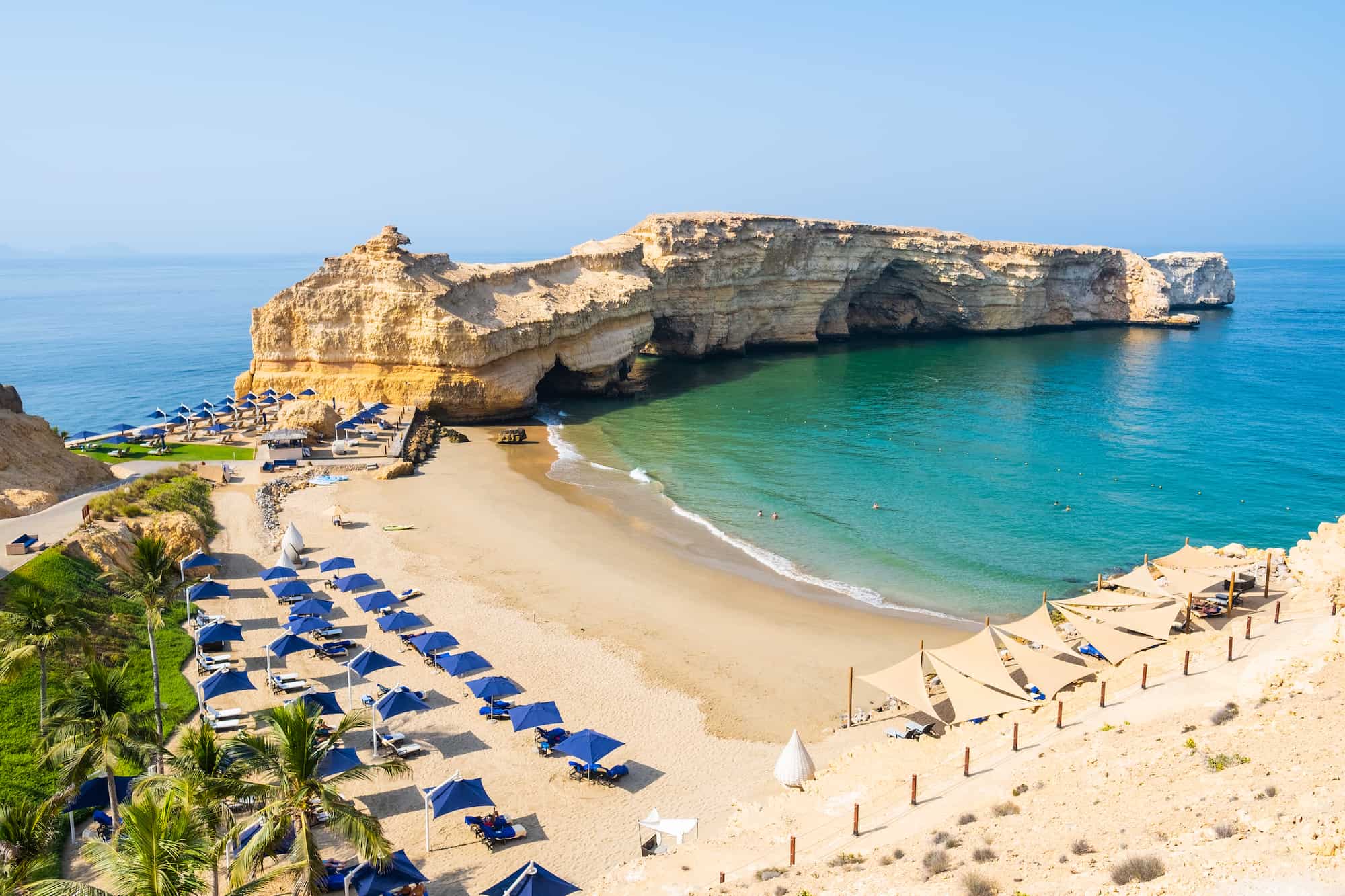
- Al Bustan Palace. Just outside Muscat, built like a palace, with a huge pool and swim-up suites. A good pick for a slow start or finish to the trip.

