
25 BEST Things To Do In The Faroe Islands

The Faroe Islands are one of the most beautiful places we’ve ever been, and the only destination this small that we’ve flown back to. We spent a week here in 2017 and ten days in July 2022, and left both times feeling it was too short. We even got married in the town hall of Torshavn during our last trip!
The eighteen islands sit in the North Atlantic between Iceland and Norway. They’re a self-governing part of the Kingdom of Denmark, home to about 50,000 people and a lot more sheep. The landscape is raw in a way that reminds us of the African bush: sea cliffs, bare green hills, and weather that changes by the minute.

Most of what’s worth doing here is outdoors, and most of it is hiking. This guide is organised by island so you can plan days that make sense on the map. Everything in the main sections is something we did ourselves. The few things we haven’t done are in their own section near the end.
Things To Do in The Faroe Islands

Vágar: The Airport Island
Vágar is where you land, and three of the country’s most famous sights are within twenty minutes of the runway. Do them on your first or last day.
Hike to Sørvágsvatn, the lake above the ocean

Sørvágsvatn is the largest lake in the Faroes, and from the cliff at Trælanípa it looks as if it’s hanging over the sea. The trail follows the lakeshore to that viewpoint and on to Bøsdalafossur, where the lake spills into the Atlantic. It’s an easy walk of about 45 minutes each way.
The trail is on private land and the fee is high for what is a short hike. We still think it’s worth doing once. That said a guide isn’t a necessity as it’s not a particularly difficult hike, however, everyone has different levels of comfort and like to support the local economy.
See Múlafossur waterfall at Gásadalur

Múlafossur drops about 30 metres off a cliff straight into the ocean, with the village of Gásadalur behind it. On calm days it falls in a clean line. On windy days the water gets blown back up the cliff.
We’ve seen it on both trips, in 2017 and 2022, and it’s a ten-minute drive from the airport and a short walk from the road. It’s arguably one of the most iconic sights in the Faroe Islands.
Pull over at Bøur

On the road between the airport and Gásadalur, Bøur is a handful of grass-roofed houses looking out at the sea stacks and the islet of Tindhólmur. It’s a five-minute stop and worth pulling over for.
Take the boat to Mykines for puffins

Mykines is the westernmost island, with no cars, a tiny village, and the best-known puffin colony in the country. We went in 2022 on our second trip and had some blustery, cloudy, and a little rainy weather – as expected in the Faroes.

The rules have changed since our visit. From May to August every visitor pays a fee that includes a mandatory guide, and the path out to the lighthouse on Mykineshólmur has been closed since a landslide. You can still walk to a viewpoint over the colony. The boat is small and is often cancelled in bad weather, so book it early in your trip and keep a spare day.
Streymoy: Tórshavn and the north coast

Streymoy is the largest island and home to the capital. The south is where you’ll eat and sleep; the north coast has two of our favourite villages in the country.
Wander Tórshavn

Tórshavn is one of the smallest capitals in the world, with about 14,000 people, and you can see the old town in half a day. Walk the narrow lanes of grass-roofed houses around the old parliament on the harbour, then follow the waterfront to the cathedral.
It has a personal place in our story: we got our marriage licence at the town hall here in July 2022. We walked out and took photos around town in the middle of the day, in peak season, with nobody else around. Foreigners can marry in the Faroes with a few months’ notice to the town hall, which we found far simpler than most countries.
Eat and drink in Tórshavn

There aren’t many restaurants in the Faroes, but the ones in the capital are very good. These are the places we went back to.

- ROKS. Seafood from the team behind KOKS. We had one of their set course meals that relied heavily on the local products from the sea.
- Etika. We love the sushi here and it’s surprisingly affordable compared to some other restaurants around the town. Guess it’s easy to get salmon!
- The Tarv. A steakhouse on the harbour, and the best steak we had on the islands.
- Katrina Christiansen. Faroese ingredients served as small plates. Order several and share.
- OY Brewing. Where we ended up after windy days out. Good beer and better food than a brewery needs to have.
Hear a concert inside a sea cave

On certain summer days the Summartónar music festival holds concerts inside a sea grotto. You sail out on the schooner Norðlýsið, the boat noses into the cave, and musicians play on the water.
It was the first concert we’ve ever been to in a cave, and it felt a very long way from anywhere. Dates are limited, so check the festival programme before you book flights around it.
Spend time in Tjørnuvík

Tjørnuvík sits at the end of the road on the north coast, a small village on a black sand bay facing the sea stacks Risin and Kellingin. It’s one of our favourite places in the Faroes, and we wished we’d booked a night here instead of visiting for the day.

- Surf. We had no idea you could surf here until we tried it with the Faroe Islands Surf Guide. They supply the wetsuit, board and food, and there’s a hot tub at their surf shack afterwards. It became one of our most memorable days. Cameron would happily go back and catch some more waves.
- Swim, briefly. The water is freezing even in July. If you go in off the beach, stay close to shore, because the currents are strong.
- Hike. Trails run from the village along the cliffs toward Mýlingur, and over the pass to Saksun, about 7 km one way. The Mýlingur route has unprotected drops of more than 100 metres. We walked up to the pass to Saksun and back as we hadn’t arranged a point to point.
Visit Saksun, on its terms

Saksun is a few turf-roofed houses and a church above a tidal lagoon, at the end of a single-lane road that is worth the drive on its own. When we first came in 2017 we were the only people there.

By 2022 it had changed. There were signs everywhere telling visitors to stay on the road, and the welcome was noticeably cooler. Too many people had walked through gardens and peered into windows for a photo. Go, but stay on the marked paths, leave the drone in the car, and remember people live here.
Stop at Fossá waterfall

Fossá is the tallest waterfall in the Faroes at about 140 metres, falling in two tiers beside the coast road north of the capital. It’s at its best after heavy rain. Most people look from the road; a short, steep path leads up to the first tier.
Drive the Norðradalsskarð pass

This mountain road above Tórshavn looks down into the Norðradalur valley and out to the island of Koltur. It’s very windy at the top. Keep an eye out for buttercup road signs across the islands, which mark scenic routes like this one.
Eysturoy: Gjógv and the highest peak
Eysturoy is the second-largest island, linked to Tórshavn by an undersea tunnel with a roundabout in the middle of it. The north of the island is where we’d base ourselves for hiking.
Stay in Gjógv

Gjógv is named for its gorge, a 200-metre sea-filled cleft that runs from the village to the ocean and has served as its harbour for centuries. You can look down from above or take the steps to the water.


We stayed here for a few nights in a traditional Faroese fishing house we booked on Airbnb, with four bedrooms and a proper kitchen. We stayed here in 2022 and had a wonderful time along with some of the best weather we’ve ever had on the islands.

- Lunch at Gjáargarður, the guesthouse. It was reservations only when we went.
- Waffles at Gjáarkaffi, open in summer.
- The memorial near the church to the village fishermen lost at sea.
Hike from Gjógv toward Ambadalur for puffins

A path climbs from the gorge, with steps at the start, and follows the cliffs west toward the Ambadalur valley. We saw a lot of puffins from this trail in July, without a boat or a tour. They’re smaller than we expected. There’s a small fee for the trail, paid in cash into a box, so bring kroner.
Puffins nest in the Faroes from roughly May to August. Stay on the path, keep clear of burrows, and don’t fly a drone near the cliffs.
Walk up to Hvíthamar

Hvíthamar is a short, easy walk from the road above the village of Funningur to a viewpoint over Funningsfjørður. It’s one of the best views for the least effort in the country. We had cloud and were happy anyway. On the way, stop at the grass-roofed church in Funningur.
Climb Slættaratindur

At 880 metres, Slættaratindur is the highest mountain in the Faroes. The trail from the pass at Eiðisskarð is short and steep, and on a clear day they say you can see all eighteen islands from the top.
The Northern Isles: Kalsoy and Viðoy

The six northern islands are the most dramatic part of the country: long, steep ridges separated by narrow sounds. Klaksvík is the hub, and Kalsoy is the day most people remember.
Take the ferry to Kalsoy and hike to Kallur Lighthouse

Kalsoy is a thin island reached by a 20-minute ferry from Klaksvík. At its northern tip, a small lighthouse sits on a grassy headland with cliffs falling away on every side. It’s the best-known view in the Faroes and it deserves to be.
The hike from the village of Trøllanes is about 4 km return with roughly 300 metres of climbing, and took us under two hours. It’s easy in good weather and unpleasant in bad. We had fog and rain and still loved it. Nearby you’ll find a headstone for James Bond, left from the filming of No Time to Die.
Book the ferry. The boat takes twelve cars. On our trip there were no reservations and we missed two sailings as the fourteenth car in line, once in each direction. Vehicle spots can now be pre-booked, though only seven per sailing; the rest are held for islanders or filled from the queue. Book as early as you can, or leave the car in Klaksvík and use the bus that meets the ferry. Never count on the last boat back.
Meet the Seal Woman in Mikladalur

On the way to the lighthouse, stop in Mikladalur. A 2.6-metre bronze statue of Kópakonan, the Seal Woman, stands on the rocks below the village. Her legend ends with a curse on the men of Mikladalur. Read it on the sign once you’re there.
Stop in Klaksvík

Klaksvík is the second-largest town and the departure point for Kalsoy, so you’ll pass through it. It’s a working fishing port wrapped around a harbour, with a few places to eat and stay.
Give it an hour or two on either side of the ferry. Kafé Fríða is the classic spot to grab lunch or a coffee and it’s right next to the tourist information office which is a nice stop.
Hike Villingardalsfjall from Viðareiði

Viðareiði is the northernmost village in the Faroes, with a church on the shore and mountains on both sides. The trail up Villingardalsfjall starts from the village and climbs more than 800 metres in about 2.5 km.
It’s steep and hard, and marked with blue posts most of the way. The views over the northern islands are out of this world and worth the climb. Just try to pick a day with good weather if you can!
Fees and bookings to know before you go

Several of the best-known hikes cross private land and now charge a mandatory fee, and two need booking ahead. A few things have changed since our last trip, so here is where things stand as of October 2026.
| Hike or trip | Fee per adult (DKK) | What to know |
|---|---|---|
| Sørvágsvatn / Trælanípa | 200 unguided, 450 guided | Guided hikes leave three times a day |
| Kallur Lighthouse, Kalsoy | 200 | Cards accepted at the trailhead |
| Villingardalsfjall | 200 | Cash in the mailbox at the gate |
| Mykines | 500, or 400 booked online | 1 May to 31 August. Includes a mandatory guide. The lighthouse path is closed |
| Drangarnir | 600 | Guided only |
| Kalsoy ferry | Ticket price | Seven car spots per sailing can be pre-booked |
Fees are listed by Visit Faroe Islands, which also notes that new sustainable tourism legislation may change them. Check that page before you travel, and carry some Danish kroner for the cash boxes.
What we haven’t done

Two trips weren’t enough for everything. These are the things readers ask us about most that we can’t speak to first-hand.
- Drangarnir. The sea arch and stack off Vágar. The hike crosses private land and can only be done with a guide. You can also see it from the water. Book a boat tour
- Nólsoy. The small island facing Tórshavn harbour, a short ferry ride from the capital. Sail there on the schooner Norðlýsið
- Kayaking. Local outfitters run guided trips into coves and under waterfalls you can’t reach on foot.
- Horse riding. The Faroese horse is a small, sturdy breed found only here. Book a ride
Planning your trip
How long do you need?

Give it at least seven days, and ten if you can. We spent a week on our first trip and ten days on our second, and both felt short. Weather will cost you at least one day, and the best days here are the ones where you can wait for a clear window.
Getting there

- By air. Vágar (FAE) is the only airport. Atlantic Airways is the national carrier, with flights from Copenhagen and a changing list of other European cities. Planes can’t land in heavy fog. We were stuck an extra day because of it, so don’t book a tight connection home.
- By sea. Smyril Line runs a car ferry from Hirtshals in Denmark and Seyðisfjörður in Iceland.
Getting around
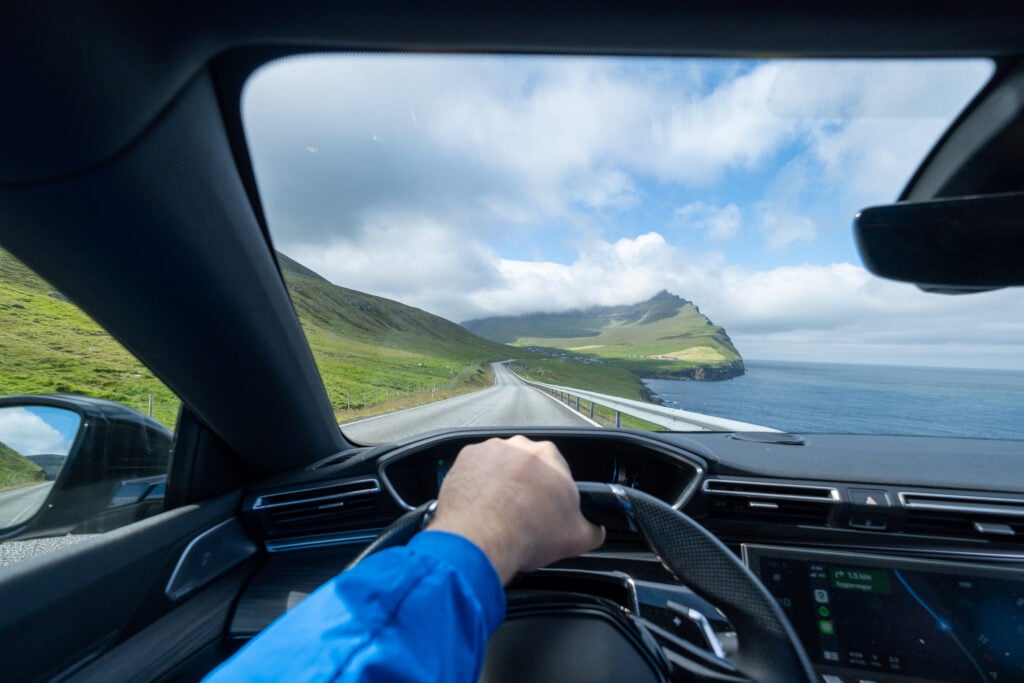
Rent a car. Buses reach most villages but run infrequently, and nearly everything in this guide is at the end of a small road. We rented from 62N at the airport and it went smoothly. Cars are expensive here, so book early and share the cost if you can. We cover the details in our Faroe Islands car rental tips.
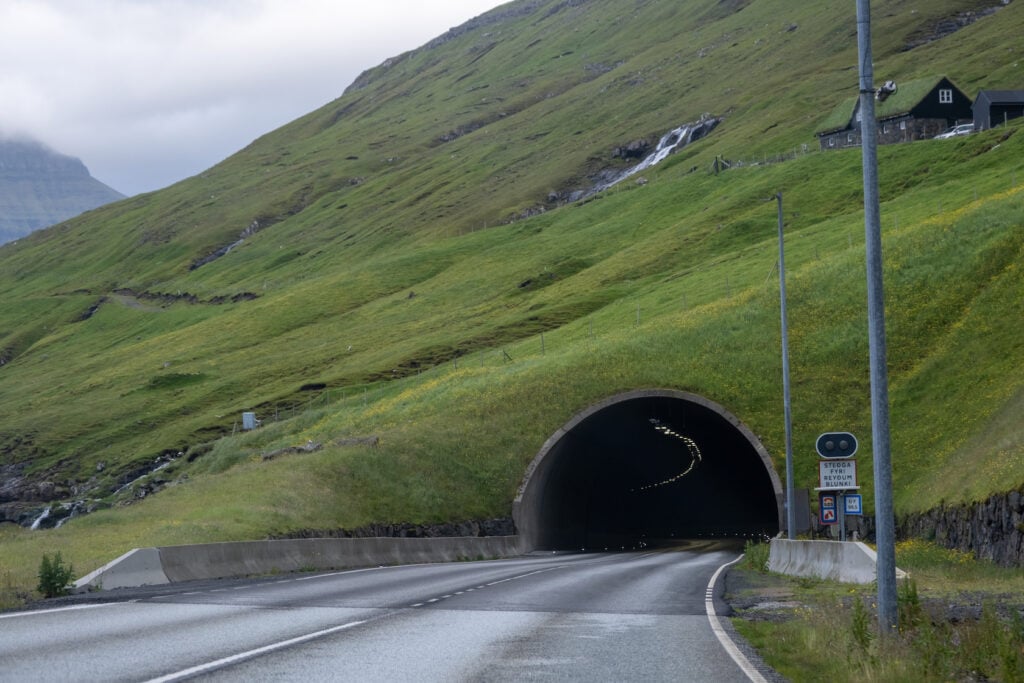
- Tunnel tolls. Four undersea tunnels charge a toll, read from your number plate and billed through the rental company. The Vágar tunnel from the airport is about DKK 100 return. The Eysturoy and Sandoy tunnels cost considerably more, and some rental companies add a handling fee. Ask what yours charges when you pick up the car. Current rates are on tunnil.fo.
- Speeding. Don’t. We met a traveller who had been fined about $400.
- Sheep. They’re on every road. If you hit one you must call the police on 112, because the farmer needs the report for insurance.
- Buses in Tórshavn are free.
Where to stay

Most hotels are in Tórshavn and Klaksvík. We’d split a trip between the capital and a village guesthouse in the north, as we did in Gjógv.
- Hotel Føroyar, on the hill above Tórshavn. We’ve stayed here twice and have loved our stay every time!
- Hotel Brandan
- Hotel Hafnia
- The View
When to go

June to early September has the warmest weather, the longest days and the puffins. We visited in mid-July and wore a down jacket and a rain shell every day, with a few sunny spells mixed in.

July and August book out, so reserve cars and rooms months ahead. Our guide to the best time to visit the Faroe Islands goes month by month.
What to pack

Pack for wind and rain in any month. You need hiking boots, a rain jacket, a packable down jacket, a hat and warm trousers. Natasha also lived in her Blundstones for villages and short walks.
Good to know

- Stay back from cliff edges, above all in wind. The drops are huge and unfenced.
- It isn’t cheap. Nearly everything is imported. We found it a little pricier than Denmark and less than Iceland.
- Language. Faroese is the official language, and almost everyone speaks excellent English.
- Entry. The Faroes are part of the Kingdom of Denmark but outside the Schengen Area, so check entry rules separately.
- SIM cards are sold at the airport.
- The sheep are very cute and do not want to be touched. Natasha tried on every hike and only succeeded with two friendly lambs.
Map of the Best Things to do in the Faroe Islands

Plan For Your Trip
- Protect Your Trip: We don’t travel without travel insurance, nor should you. You never know what can happen while traveling, so it’s best to be prepared. HeyMondo provides excellent short-term and long-term travel insurance plans.
- Find Cheap Flights: Sign up for Going (formerly Scotts Cheap Flights) to get notified when prices get low.
- Book a Rental Car: We use Discover Car to book all our rental cars! You can also read our top tips for renting a car abroad here.
- Travel Adapter: Make sure you find a good adapter to keep your personal electronics charged. Otherwise, you may be paying for a cheap one once you land. Purchase one here.
- Travel Backpack: We like the Nomatic Travel Backpack for our travels. Check the price here.
- Our Favorite Travel Shoes: Our answer to this question is always Allbirds! Check them out on their site!
- Get a Travel Credit Card: We travel worldwide for free because we have leveraged our spending into points. See how you can do the same with our favorite travel credit cards.

