
The Best Hiking Backpacks • Updated and Reviewed
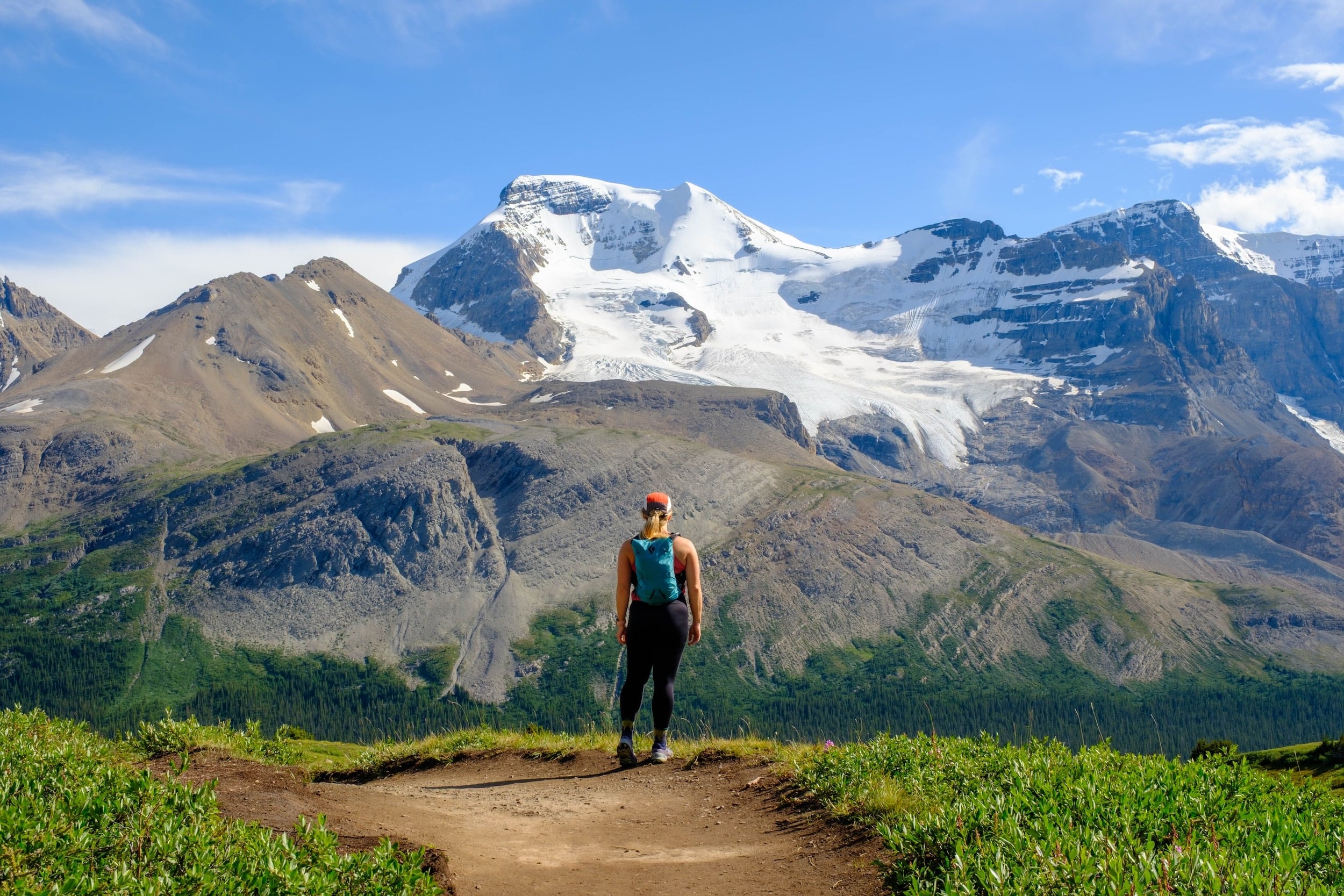
The best hiking backpack is the smallest one that fits your body and carries what you actually need. We live in Canmore, in the Canadian Rockies, and hiking, scrambling, climbing, and backpacking are a big part of our lives. We’ve owned a closet’s worth of packs, and we’ve learned that getting the size right matters more than any feature.
Here’s the lesson we keep relearning: go too big and you fill it with things you don’t need; go too small and you regret it halfway up a pass. In general we lean light. We did the Three Passes trek in Nepal unsupported with packs under 40L and had room for everything we needed, and more.
For multi-day trips we go two routes. When the load is heavy or the trip is long, we still love a fully framed pack like the Osprey Atmos or Gregory Baltoro. For most trips in recent years, though, I’ve moved to a lighter pack with a simple, often removable frame sheet. This guide covers both, plus the daypacks we use most.
The Best Daypack Picks

US list prices as of October 2026. Most packs come in a men’s and a women’s version, listed together.
| Pack | Best for | Capacity | Price (USD) |
|---|---|---|---|
| Osprey Talon 22 / Tempest 22 | Best overall daypack | 22L | $175 |
| Black Diamond Distance 22 | Fast and light | 22L | $229 |
| Black Diamond Pursuit 25 | Scrambles and alpine days | 25L | $200 |
| Arc’teryx Alpha FL 30 | Climbing | 30L | $280 |
| Osprey Stratos 24 / Sirrus 24 | Heavy day loads, hot days | 24L | $200 |
| REI Co-op Flash 22 | Budget | 22L | $60 |
Osprey Talon 22 / Tempest 22
Best Overall Daypack

Capacity: 22L (other sizes available) · Weight: about 2 lb 6 oz · Price: about $175
If you want one daypack for everything from a lake walk to a long summit day, start here. It’s our most versatile pack: we’ve used the Talon and Tempest everywhere from hiking around Chamonix to via ferratas in the Dolomites and scrambles in the Rockies.
It’s light and slim, with a real hip belt, so it works as well on a via ferrata as on a trail. Tasha has called the Tempest the pack she uses most: the stretchy front mesh pocket swallows a jacket, a climbing harness or lunch, and it stays comfortable all day.
Downsides: The side pockets are tight, and Tasha’s one gripe is that the hydration sleeve sits outside the main compartment.
Black Diamond Distance 22
Best Fast-and-Light Daypack

Capacity: 22L · Weight: 400 g · Price: about $230
This is Tasha’s favorite for long, fast days. It wears like a running vest, with flask pockets on the shoulder straps and sleeves for folding poles, so you can eat, drink and grab your poles without taking it off. At 400 grams, you barely know it’s there. This Tasha’s go to pack for just about any day hike or adventure in the mountains. It’s feature rich, comfortable, and super lightweight.
Downsides: There’s no real hip belt, so it isn’t for heavy loads.
Black Diamond Pursuit 25
Best for Scrambles and Alpine Days

Capacity: 25L · Price: $200
The Pursuit is the bigger, more supportive sibling of the Distance. It pairs vest-like storage with real pack support, and the 25L size has room for layers on a long day above treeline.
It’s our go-to backpack for longer day hikes. The Pursuit features a more robust suspension system and hip belt than the Distance yet remains lightweight and ready to tackle quick objectives.
Downsides: It’s more pack than you need for a short trail.
Arc’teryx Alpha FL 30 Pack
Best for Climbing and Mountaineering

Capacity: 30L · Price: $280
I’ve been climbing and mountaineering more in recent years, and this is the pack I reach for. I love it. It’s a stripped-back, roll-top alpine pack that weighs under a pound and a half, yet the tough, weather-resistant fabric and taped seams make it highly water-resistant. There are two ice axe loops, a top strap that holds a rope, and lash points for crampons or a belay jacket, and a stiff back panel gives it shape without a frame.
It’s not a trail daypack. It’s built for climbing and alpine days, but I’ve still taken it on plenty of day hikes and used for our last trip to the Dolomites and Greece where we had a mix of climbing and hiking.
Downsides: There’s almost no organization, just one zippered outside pocket, and the hip belt is thin webbing, so it isn’t made for heavy loads or long trail days.
Osprey Stratos 24 / Sirrus 24
Best for Heavy Day Loads

Capacity: 24L · Weight: about 2 lb 12 oz · Price: $200
We’ve both used the Stratos and Sirrus, and they’re what we’d grab for big days when you’re carrying layers, lunch, plenty of water and bear spray. The suspended mesh back holds the pack off you so air can move, which is the main reason to choose it over a lighter daypack on a hot, steep climb.
It also has a padded hip belt with pockets, a built-in rain cover and a hydration sleeve. The Sirrus is the women’s version. That said we go the Tempest/Talon more in the Rockies as we like to carry a helmet when we’re bagging peaks.
Downsides: Heavy for a daypack, and the small pockets are tight.
REI Co-op Flash 22
Best Budget Daypack

Capacity: 22L · Weight: 14 oz · Price: $60
For short hikes, or as a summit bag that packs into your big pack, the Flash 22 is hard to beat for the money. It’s light, simple and well made. It’s a great backpack for most recreational hikers that hit the trails during trips or a few times a year. Not everyone needs to buy several hundred dollar pack designed for big mountains!
Downsides: Little structure and thin straps, so keep loads light.
The Best Multi-day Backpacks

We split these into two camps. Framed packs carry heavy loads comfortably; lightweight packs save pounds but ask you to pack less. Neither is better. Pick by how much you’ll carry.
| Pack | Best For | Capacity | Price |
|---|---|---|---|
| Osprey Atmos AG 65 / Aura AG 65 | Best overall, comfort | 50–65L | $370 |
| Gregory Baltoro 65 / Deva 60 | Heavy loads, long trips | 60–75L | $370 |
| Gregory Paragon / Maven | All-round comfort, less weight | 58–60L | $300 |
| Granite Gear Blaze 60 | Lightweight that still hauls | 60L | $300 |
| Osprey Exos 48 / Eja 48 | Medium-sized, light and ventilated | 38–58L | $265 |
| Hyperlite Mountain Gear Southwest 55 | Ultralight | 40–70L | $395 |
| REI Co-op Flash 55 | Budget | 55L | $229 |
Framed packs for heavy loads
Osprey Atmos AG 65 / Aura AG 65
Best Overall

Capacity: 50L or 65L · Weight: about 4 lb 10 oz · Price: $370
The Atmos has been my main pack for years, and it’s still the one I’d recommend to most people. I can load it to 40 lb and it still sits comfortably on my back.
The suspended mesh back keeps you cool on a hot climb, and the harness can be fine-tuned for almost any body. I love the dual front pockets, the mesh pocket for dirty shoes, and the straps for tent poles. The Aura is the women’s version.
Downsides: At over 4.5 lb, it’s heavy before you’ve packed anything.
Gregory Baltoro 65 / Deva 60
Best for Heavy Loads

Capacity: 60–75L · Weight: about 5 lb 3 oz · Price: $370
I use the Baltoro on long multi-day treks or camping trips when I need to carry a lot of gear. We love the suspension system as it’s more comfortable the Osprey. The Deva is the women’s version.
Downsides: It’s heavy and overkill for a weekend.
Gregory Paragon 60 / Maven 58
Best All-round Comfort for Less Weight

Capacity: 58–60L · Weight: about 3 lb 8 oz · Price: $300
If the Atmos feels like too much pack, the Paragon is about a pound lighter and still comfortable. It has easy fit adjustments, a ventilated mesh back panel and a bear canister-friendly shape.
Downsides: Heavier than true lightweight packs, and the mesh back pocket may wear.
Lightweight Packs
For my own lighter trips I carry a Gregory Alpinisto. I love it, but it’s an alpine climbing pack and not the right fit for most hikers. These are the lightweight packs we’d point most people to.
Granite Gear Blaze 60
Best Lightweight Pack That Still Hauls

Capacity: 60L · Weight: about 3 lb · Price: $300
The Blaze is the pack I’d point to if you want to go lighter without giving up comfort. One of my favorite features is the massive front and side pockets. It’s rated to carry 50 lb.
Downsides: The small buckles are hard to use with gloves on, and the back panel runs warmer than the mesh-backed Osprey packs.
Osprey Exos 48 / Eja 48
Best Medium-sized Lightweight Pack

Capacity: 38–58L · Weight: under 3 lb · Price: $265
The Exos brings Osprey’s suspended mesh back to a sub-3-lb pack, so you get airflow and a real hip belt at a fraction of the Atmos’s weight. The 48L is the size we’d pick for most people: enough for two or three nights with lighter gear, and small enough that you won’t overpack.
It also comes in 38L and 58L. If you want to cut even more weight, look at the lighter Exos Pro. We haven’t carried it.
Downsides: It feels heavier than it is because the load sits away from your back.
Hyperlite Mountain Gear Southwest 55
Best Ultralight

Capacity: 40–70L · Weight: about 1 lb 15 oz · Price: $395
The Hyperlite is one of my favorite packs on the market. It’s under 2 lb and made from Dyneema, which is light, strong and very water resistant. If I’m carrying a big 70L load, though, I’d rather have the support of the Atmos.
A note on ultralight packs in the Rockies: the lightest fabrics don’t love sharp limestone scree. The Hyperlite’s Dyneema is tougher than most, but I wouldn’t take the flimsiest ultralight packs up a Rockies scramble.
Downsides: It’s expensive, has minimal organization, and the back panel doesn’t breathe well.
REI Co-op Flash 55
Best Budget Multi-Day Pack

Capacity: 55L · Weight: about 2 lb 15 oz · Price: $229
We’ve used REI packs for years, and the Flash 55 is the best value here. It’s light, has a real frame and lots of customization, and it’s perfect for a long weekend in the mountains.
Downsides: It’s comfortable to about 30 lb, and the materials won’t last as long as pricier packs.
How to choose a hiking backpack
Size: buy for the trip you actually do

Sizing is a fine line. Too big and you’ll fill it with things you don’t need; too small and you’ll be strapping gear to the outside. As a rough guide:
| Trip | Capacity |
|---|---|
| Day hikes | 15–30L |
| Scrambles and alpine days | 25–35L |
| Overnight to 3 nights | 35–50L |
| 3–5 nights | 50–65L |
| A week or more, or winter | 65L+ |
The lighter your gear, the smaller you can go. On the Three Passes trek in Nepal, we carried 35L packs unsupported and had room to spare. The trek took us over two weeks, but we stayed in teahouses so never needed anything more than a sleeping bag.
Fit beats weight
A pack that fits well will feel lighter than a lighter pack that doesn’t. Carrying an extra pound is worth it if the pack is comfortable. Measure your torso length (from the bony bump at the base of your neck to the top of your hip bones) and buy the size that matches. If you can, try packs on in-store with 10–15 kg inside.
Read reviews with your own body in mind. I have narrow hips, so if reviewers mention a wide hip belt, I look elsewhere.
Women’s versions

Most brands make a women’s version of each pack: Osprey’s Aura, Tempest, Sirrus and Eja; Gregory’s Deva and Maven. They have shorter torso ranges, narrower and differently shaped shoulder straps, and a hip belt shaped for wider hips. Fit matters more than the label, so try both.
Frame and suspension
- Suspended mesh back (Osprey Atmos, Exos, Stratos): a gap between your back and the pack keeps you cool, but the load sits slightly further from your body.
- Frame sheet or internal frame (Gregory, Granite Gear): carries heavy loads close to your back. A removable frame sheet lets you strip weight for lighter trips.
- Frameless or minimal (ultralight packs): the lightest option, but only comfortable with a light, carefully packed load.
Hydration and Rockies features
We hike with a water bladder, so a hydration sleeve and port are essential for us. In the Rockies, also look for an easy place to carry bear spray, ideally on the hip belt or a shoulder strap where you can grab it in a second, and ice axe and pole loops for shoulder-season trips.
Durability
Rockies limestone is sharp. If you scramble, choose tougher fabrics like nylon or heavier Dyneema over the thinnest ultralight materials.
FAQ

What size backpack do I need for hiking? For day hikes, 15–30L. For one to three nights, 35–50L. For longer trips, 50–65L. Go as small as your gear allows.
Are men’s and women’s hiking backpacks different? Yes. Women’s versions have shorter torso ranges, narrower shoulder straps and a differently shaped hip belt. Choose by fit, not label.
Is an ultralight backpack worth it? If your other gear is light and your loads stay under about 30 lb, yes. If you carry heavy loads or scramble on sharp rock, a framed pack in tougher fabric is the better choice.
What’s the best hiking backpack for the Canadian Rockies? For day hikes, the Osprey Talon or Tempest. For backpacking, the Osprey Atmos or Aura if you want comfort, or a lighter pack like the Granite Gear Blaze if your kit is dialed in. Whatever you choose, make sure you can reach your bear spray quickly.

