
Seychelles Travel Tips For First Timers
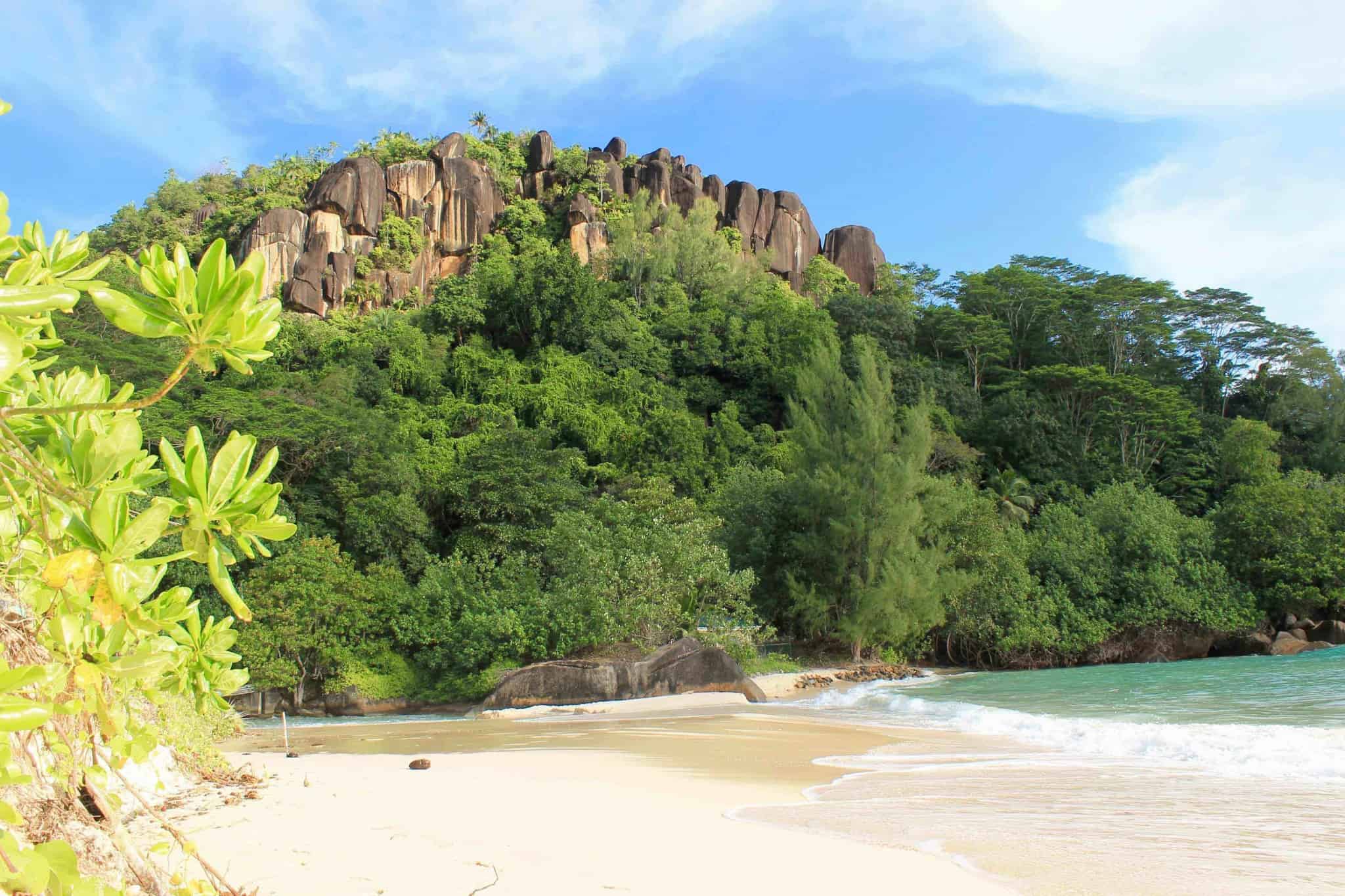
We should have been exhausted. We landed on Mahé at 8 a.m. after a red-eye from Abu Dhabi spent next to several screaming babies. Then we walked out of the tiny airport into granite boulders, impossibly clear water and green mountains, and forgot we were tired.
We spent about a week in the Seychelles in 2016, driving ourselves around Mahé, cycling La Digue and staying on Sainte Anne. Most writing about the Seychelles assumes you’ll never leave a resort. This guide is for people who want to see the islands for themselves, and it’s honest about what it costs.
Where are the Seychelles?

The Seychelles are an island nation in the Indian Ocean, off the coast of East Africa, north of Madagascar and Mauritius. There are 115 islands, but most visitors see three: Mahé, the main island, with the international airport and the capital, Victoria; Praslin; and La Digue. The country is its own republic, and it counts as part of Africa.
Apply for your Travel Authorisation before you fly
The Seychelles doesn’t require a visa from any nationality, but every visitor now needs a Travel Authorisation, applied for online before departure. According to the U.S. State Department, you can apply up to 30 days before travel, the standard fee is EUR 10.90, and you need proof of onward travel and confirmed accommodation.
That last part isn’t a formality. Even in 2016, before the online system, immigration asked us for our booking confirmations and addresses before letting us in. The Seychelles is not a place to arrive and figure out where you’re sleeping.
Apply through the official portal at seychelles.govtas.com or the Seychelles E-Border app. Ignore third-party sites charging several times the official fee.
It’s expensive, but you control how expensive
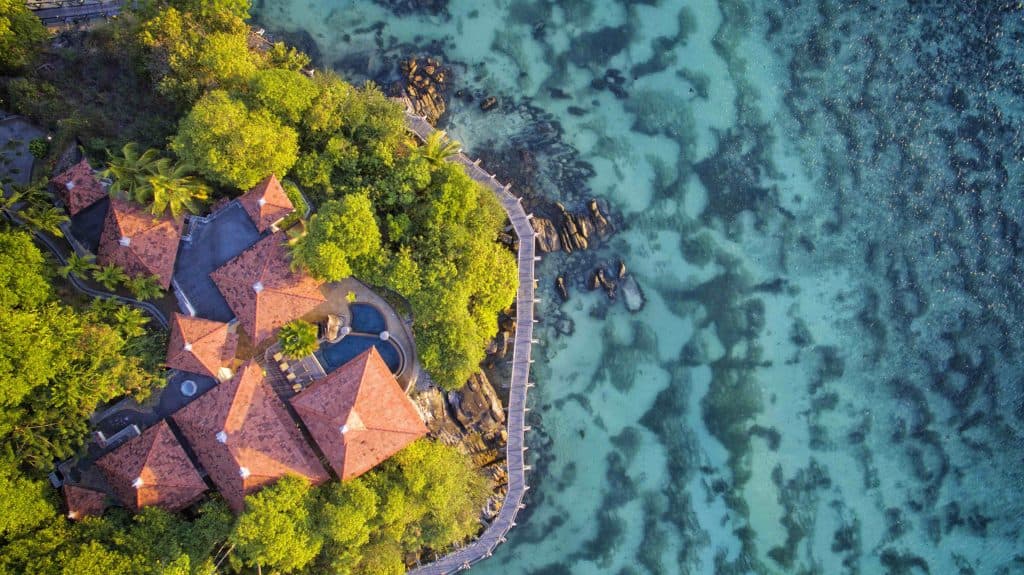
The Seychelles has a reputation as a destination for honeymooners and celebrities, and the resorts earn it. But the islands aren’t only resorts, and the gap between a resort-only trip and a self-drive one is enormous.
What kept our costs down:
- Roadside fruit and coconuts. Stalls near the beaches sell mangoes, bananas, starfruit and coconuts. We drank about three fresh coconuts a day at 30 rupees each in 2016. Ask the vendor to split the shell afterwards so you can eat the flesh.
- Takeaway food. Small shops near grocery stores sell fried chicken and chips, curries and samosas. A big portion of fried chicken was about 40 rupees.
- Supermarket drinks. A bottle of SeyBrew, the local lager, was 25 rupees at a grocery store. Buy a bottle of Takamaka rum and mix your own drinks instead of paying resort bar prices.
- Self-catering. There are small supermarkets all over Mahé, and a large hypermarket south of Victoria had everything we needed.
Prices have risen since our trip, so treat those numbers as a guide to the gap between local and resort prices rather than today’s menu.
Guesthouses and holiday rentals are the middle ground. They’re still pricier than in most countries, often over $100 a night, but far cheaper than resorts. Since January 2026 they also skip the tourism sustainability levy: small properties with 1 to 24 rooms no longer charge it, while larger hotels add SCR 75 to 100 per person per night.
Rent a car on Mahé
If you want to see Mahé properly, rent a car. The bus works, but a car lets you stop at every empty beach and viewpoint. We paid €35 a day in 2016 for a compact car from Maki Car Rentals, and fuel was affordable. You can drive around the whole island in a couple of hours, and we did.
- Driving is on the left.
- The roads are narrow and steep, especially the ones crossing the mountains in the middle of the island.
- Avoid driving at night. Crime wasn’t the issue. It was the lack of streetlights, the mountain bends and the people walking along the roads in the dark.
Know what each island is for

We saw three islands, and each felt like a different trip.
- Mahé is where you’ll land and where most of the variety is: beaches all around the coast, mountain trails through the jungle in the middle, and the small capital, Victoria. It’s the best island for a road trip.
- La Digue has almost no cars. Everyone gets around by bicycle, and renting one is the first thing to do when you step off the ferry. The granite stone beaches with white sand just may be the most beautiful beaches in the world!
- Sainte Anne is a small island in a marine national park, about 15 minutes by boat from Mahé. Its only resort was the Beachcomber when we stayed there, and it has since been rebuilt and reopened as Club Med Seychelles. It was amazing getaway and the island was a great escape with gorgeous beaches, snorkelling, and even hiking.
We didn’t make it to Praslin, the second-largest island, so we can’t speak to it.
Plan your ferries

The Cat Cocos fast ferry runs daily between Mahé, Praslin and La Digue. It’s about an hour to Praslin and a little longer to La Digue. One-way fares are high by most standards, so budget for them, and book ahead in busy months.
Hike Mahé’s interior
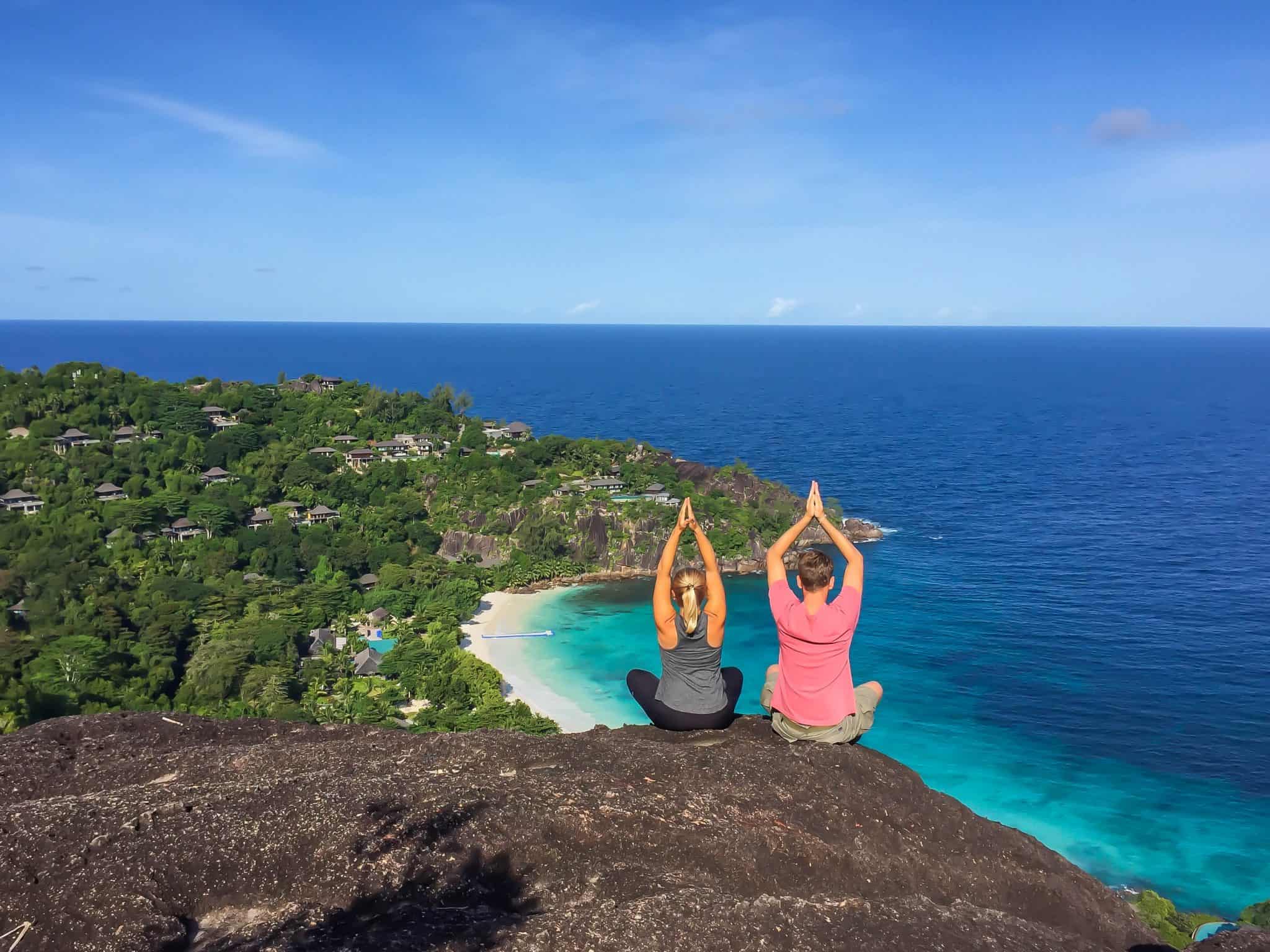
The beaches get the photos, but some of our favourite hours were on the trails through Mahé’s jungle. The islands get a lot of rain, so the interior is green and dense, and the views over the coast from up high are worth every step.
The granite boulders you see in every Seychelles photo are part of why it’s so distinctive. They’re fragments of the ancient supercontinent Gondwana.
Bring your own snorkel
The snorkeling is excellent. We were happiest finding stingrays and parrotfish on the sandy bottom. The parrotfish are also partly responsible for the white sand: they grind up coral, and much of what comes out the other end becomes beach.
Resorts lend gear, and Beau Vallon and Anse Royale on Mahé have rentals, but bringing a mask and snorkel from home (or buying one at a supermarket) means you can stop anywhere. The State Department notes that venomous stonefish live in Seychelles waters, so wear water shoes when wading over rocks and coral, and swim in marked areas.
On land, look out for Aldabra giant tortoises. We found them in several places on Mahé.
Don’t cut it close at the airport
The airport is tiny and security took minutes. That doesn’t mean you can arrive late. We turned up 55 minutes before our flight home and were firmly told we were close to missing it. Get there at least an hour ahead, and longer if you can.
Pick your season

The Seychelles is warm all year, and the main difference between seasons is wind and rain. The calmest months come between the two trade-wind seasons, roughly April to May and October to November. The southeast trade winds, from about May to September, bring cooler, breezier weather and rougher crossings, and push seaweed onto some beaches.
December to February is the wettest stretch, with short, heavy downpours. WE visited in early July and had perfect weather the entirety of our trip, with only one afternoon thunderstorm.
Good to know

- It felt very safe. We felt safer here than in many places in the U.S. and Europe.
- Money. The currency is the Seychellois rupee. Resorts often quote prices in euros.
- Language. Seychellois Creole, English and French are all official, and English is widely spoken.
- Water. We drank from filter bottles throughout to be safe.

