
30 Iceland Hot Springs to Visit Instead of the Blue Lagoon

No trip to Iceland is complete without soaking in at least one of the country’s incredible Iceland hot springs. They’re a rite of passage — locals use them weekly, and for good reason. Iceland has enough geothermal pools, natural hot springs, and geothermal spas to fill your entire Iceland itinerary without ever repeating an experience.
This guide covers 30 of the best Iceland hot springs, ranging from world-class geothermal spas to remote natural pools that barely fit two people. What you won’t find here is the Blue Lagoon — you’ve already heard about that one, and there’s a whole world of soaking beyond it.
Why Are There So Many Hot Springs in Iceland?

Iceland sits directly atop one of Earth’s most active geothermal hotspots, straddling the Mid-Atlantic Ridge where the North American and Eurasian tectonic plates pull apart. This constant geological activity heats water deep underground, which rises to the surface across the island in the form of hot springs, fumaroles, mud pots, and geysers — earning Iceland its nickname, the Land of Fire and Ice.
Nearly half of all hot water in the Reykjavik capital region comes directly from geothermal springs, arriving at near-boiling temperatures and needing to be cooled down before it reaches taps. Unlike man-made pools, Iceland’s hot springs are scattered across the entire country — some are 10 minutes from downtown Reykjavik, others require a 4WD and a river crossing to reach.
That variety is exactly what makes exploring them so rewarding. Many of the most spectacular Iceland hot springs are spread across the Ring Road and beyond — for those wanting to maximize the number of hot springs they visit, renting a campervan with RV Iceland is a great option — you can chase geothermal pools all around the island on your own schedule.
The Best Iceland Hot Springs
Hvammsvik Hot Springs

- Location: Hvammsvík, 276 Mosfellsbær (GPS)
- Website: Hvammsvik Hot Springs
Hvammsvik is our top pick among all the Iceland hot springs we’ve visited, and it’s not particularly close. Set inside a dramatic fjord — Hvalfjordur, just northwest of Reykjavik — the spa features eight natural hot spring pools of varying sizes and temperatures, all built into repurposed WWII barracks that somehow make the whole experience feel more atmospheric rather than less.
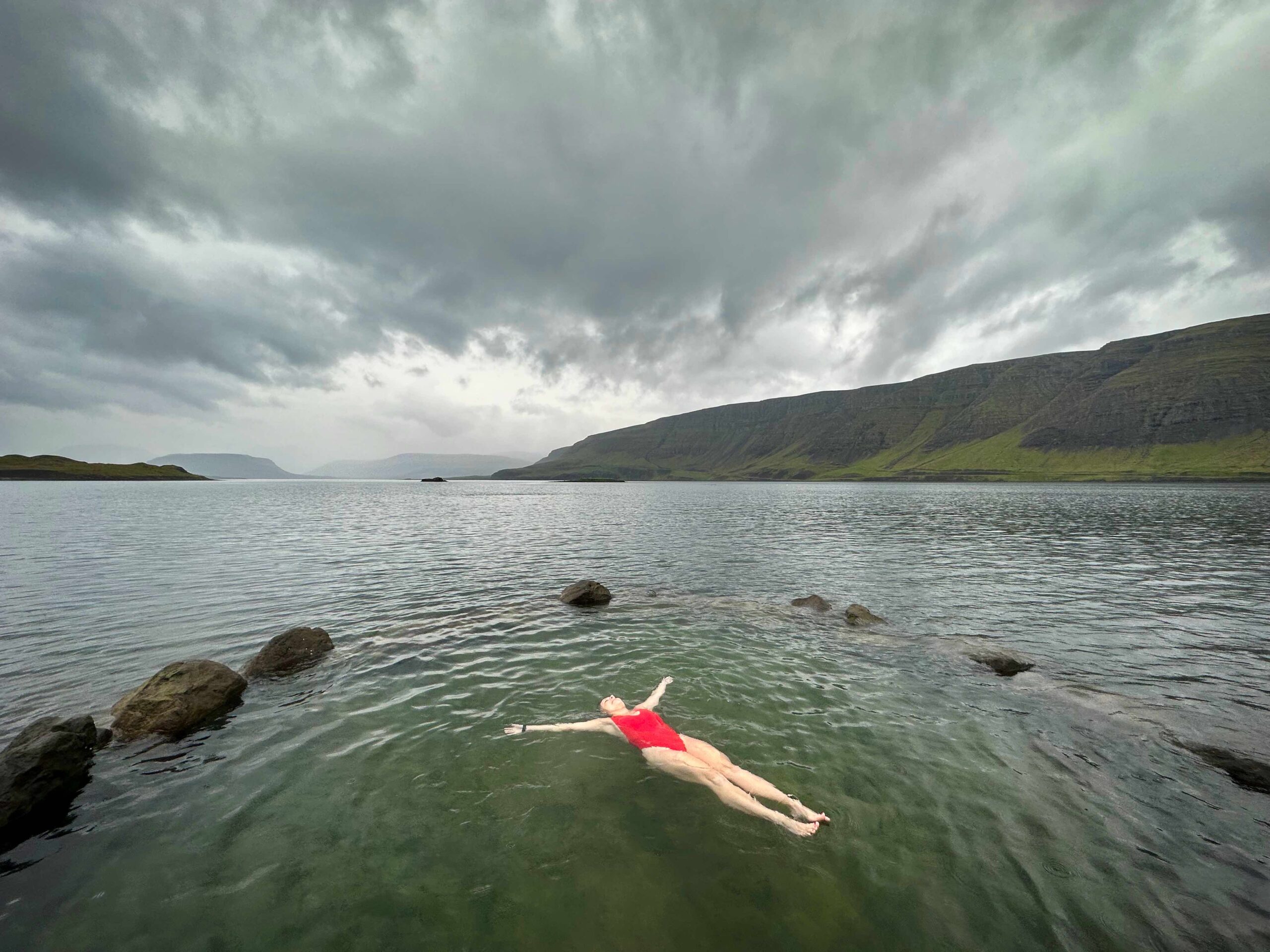
What makes Hvammsvik genuinely special is how seamlessly it blends the spa experience with raw nature. One pool sits close enough to the shoreline that ocean water floods in during high tide, cooling the water as the day progresses. When you’re ready for a cold plunge, you don’t need an ice bath — you just walk into the fjord. In winter, the northern lights often appear overhead. On clear summer evenings, the light on the mountains is extraordinary.
On-site: steam room, Stormur Bistro and Bar, and easy sea access for cold plunging. It’s only a short drive from Reykjavik, making it one of the best Blue Lagoon alternatives for visitors based in the capital.
Vok Baths
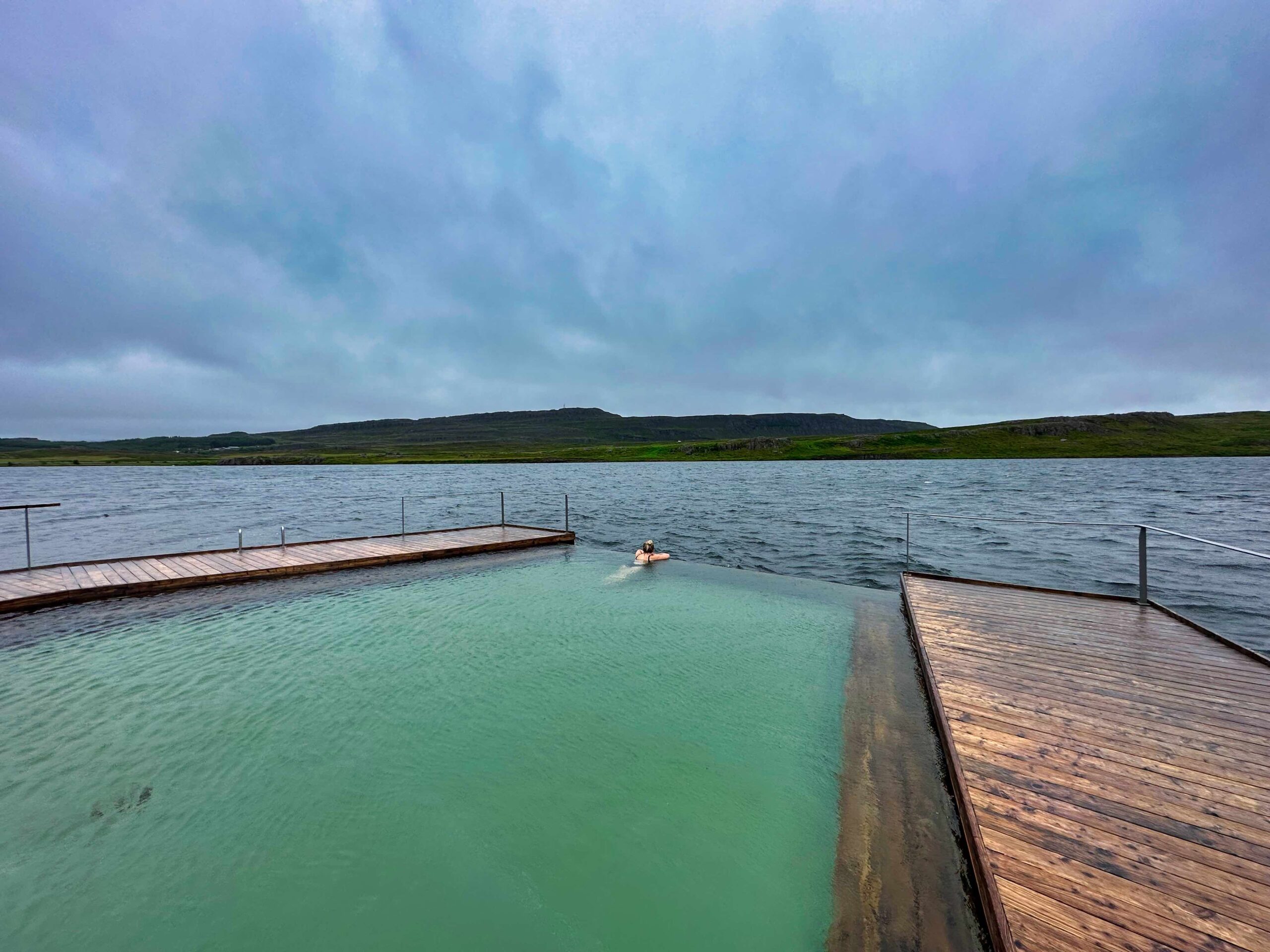
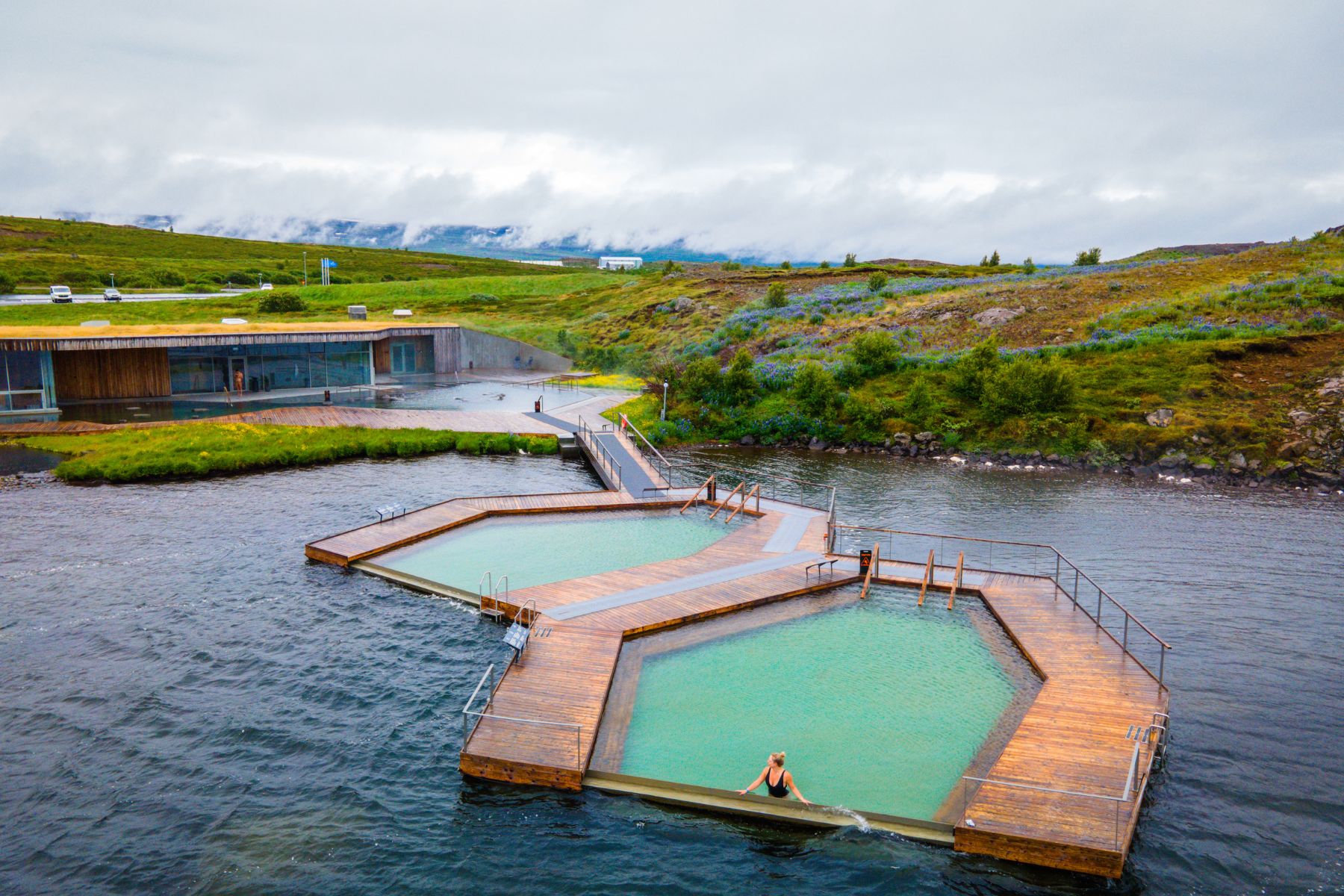
Vök Baths may be the most architecturally striking of all the Iceland hot springs — the geothermal pools actually float on Lake Urridavatn in East Iceland. The lake kept a secret for a long time: certain sections never froze in winter, and when locals investigated, they found geothermal springs heating the water from below.

Today you’ll find two floating pools, a lakeside pool with a swim-up bar, a steam room, and an on-site bistro. What’s unique here beyond the floating pools: the geothermal water in this part of Iceland is the only naturally warm drinkable water in the country, and it’s used to brew organic herbal teas — included in your admission price.
East Iceland doesn’t get the visitor numbers of the south and west, which means Vök Baths tends to be quieter and more serene than comparable spas closer to Reykjavik. If you’re road tripping Iceland’s Ring Road, this is an unmissable stop.
Sky Lagoon

- Location: Vesturvör 44-48 200, 200 Kópavogur (GPS)
- Website: Sky Lagoon
Sky Lagoon opened in 2021 and has quickly become one of the most popular Iceland hot springs for visitors staying in Reykjavik — it’s just 15 minutes from the city center and about the same distance from the international airport. It’s giving the Blue Lagoon serious competition, and in many ways it deserves to.
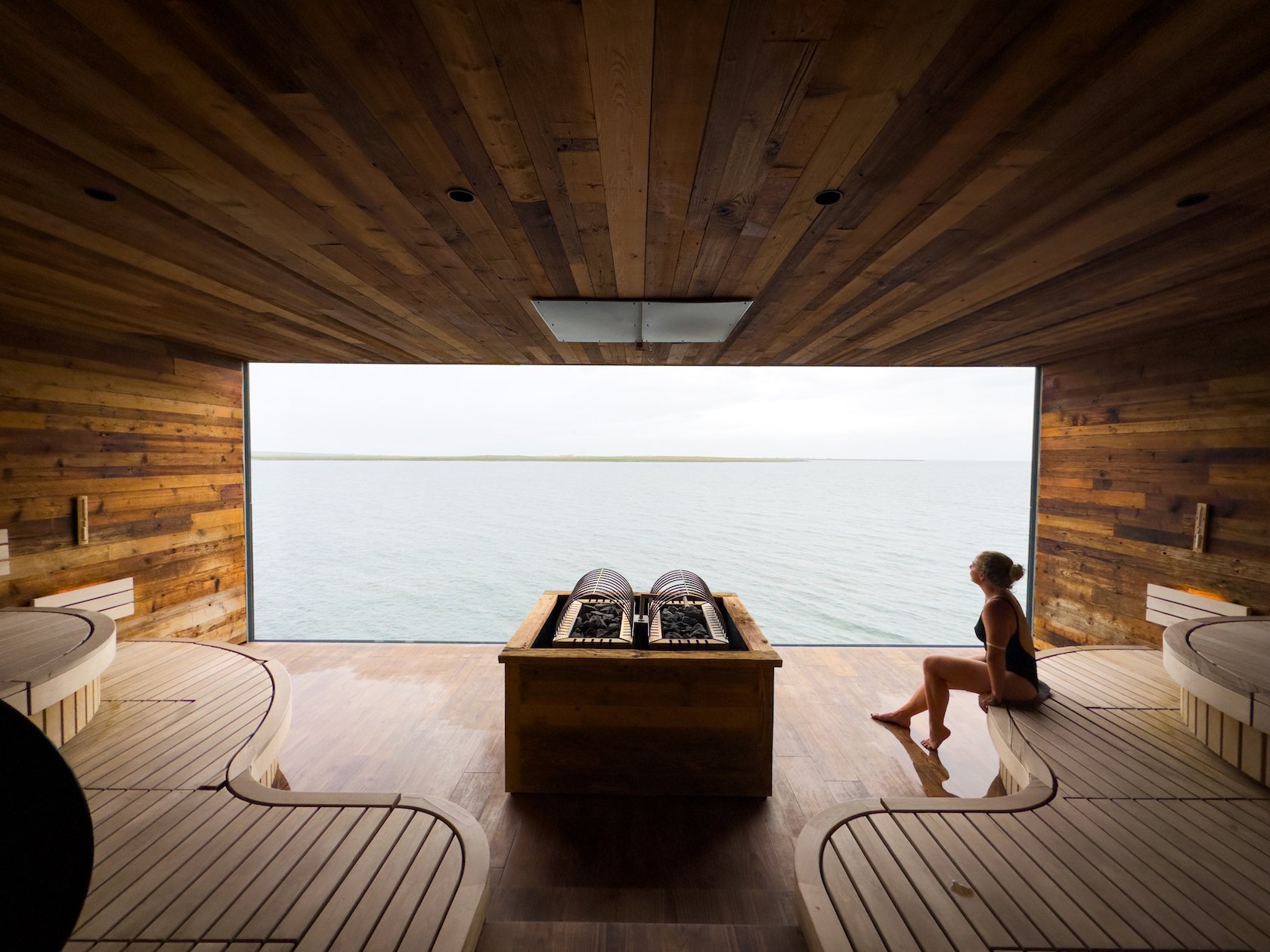
The water doesn’t have the milky blue color the Blue Lagoon is famous for, but Sky Lagoon delivers something arguably better: a quieter, more refined experience with genuinely spectacular ocean views over Skerjafjordur Bay. The spa’s signature seven-step ritual moves you between an infinity pool (37–40°C), a sauna, a cold mist room, a glacial cold plunge, and a steam room. Many visitors time their visit for sunset or northern lights season — the views from the water make both worth the trip.
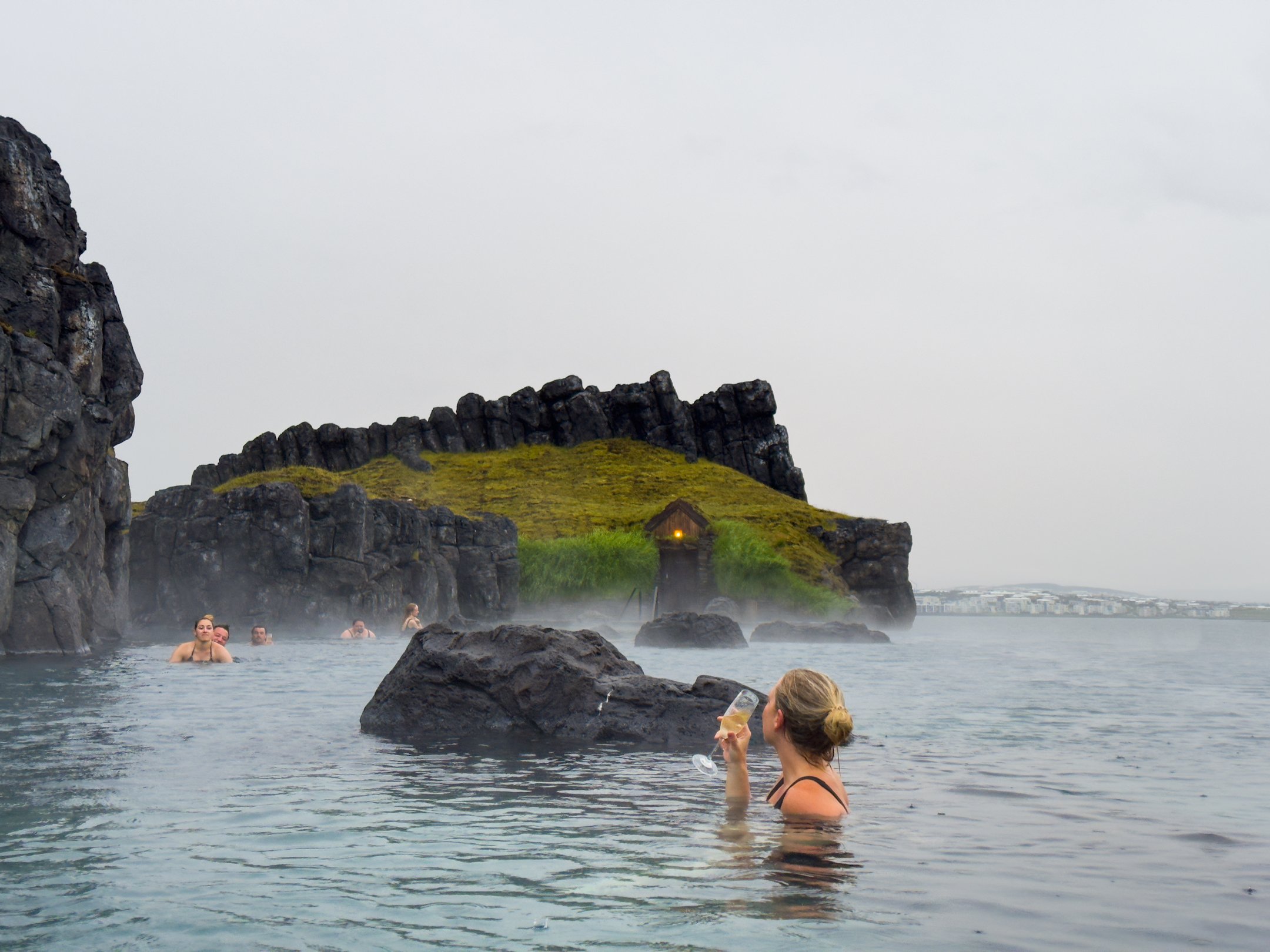
On-site: the Sky Café for light bites, Smakk Bar for Icelandic dishes, and a swim-up bar in the lagoon.
Reykjadalur Natural Hot Spring River

Reykjadalur — “Steam Valley” in Icelandic — is one of the best free Iceland hot springs accessible from Reykjavik, and one of the few where you soak in a naturally flowing hot river rather than a pool. The trailhead is about 40 minutes southeast of the city by car, and from there it’s a 45-minute hike through a geothermally active landscape thick with steam vents, bubbling mud pots, and a strong sulfur smell that you’ll either love or tolerate.
At the river, wooden boardwalks line the banks with changing dividers for privacy. The water temperature varies depending on where you position yourself — move upstream for hotter, downstream to cool off. Pack a bag: you’ll want water, a towel, and something dry to change into. Parking costs a small fee, but the soak itself is free.
Forest Lagoon Hot Springs

- Location: Vaðlaskógur 605, 605 Akureyri (GPS)
- Website: Forest Lagoon Hot Springs
Perched above the treeline near Akureyri in northern Iceland, Forest Lagoon has two geothermal infinity pools that overlook Eyjafjordur Fjord — one of the longest fjords in the country. The combination of forested surroundings and sweeping fjord views makes this one of the most visually impressive Iceland hot springs outside of the capital region.
Beyond the pools, there’s a sauna, a cold tub, a quiet room for decompressing, and an excellent restaurant. The spa stays open until nearly midnight, making it ideal after a long day of hiking or sightseeing in the north. We visited during the midnight sun and watched the light shift over the fjord from the pool — it’s one of those experiences that’s genuinely hard to overstate.
Gamla Laugin

Gamla Laugin, better known as the Secret Lagoon, sits in the small village of Flúðir and has been a gathering place since the late 1800s, when it served as both a bathing spot and a swimming school. It fell into disrepair in the 1940s but has since been restored, and today it’s one of the most atmospheric natural Iceland hot springs on the Golden Circle route.
The water stays consistently between 38–40°C year-round, and a small active geyser nearby erupts every few minutes to remind you where you are. At a fraction of the Blue Lagoon’s price, it’s one of the best value soaks in the country. Towel rental costs extra, so bring your own. In winter, this is a solid northern lights viewing spot.
Seljavallalaug Hot Mountainside Pool
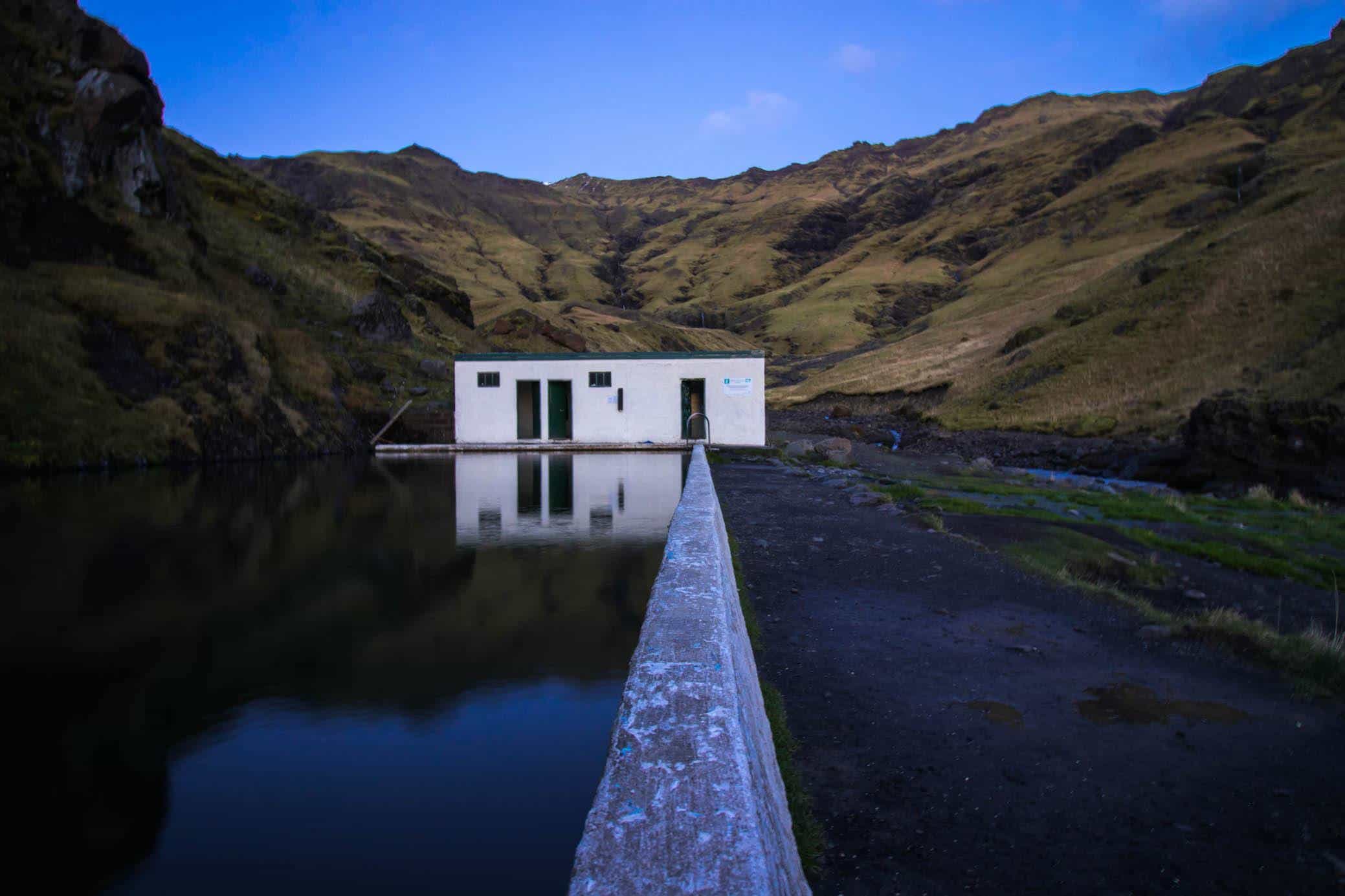
Built in 1923, Seljavallalaug is the oldest swimming pool in Iceland still in operation. The 25-meter pool is tucked deep into a beautiful valley and reached via a short but bumpy drive followed by a 15-minute hike. The setting is genuinely dramatic — green mountains, a trickling stream, and almost no infrastructure beyond the pool itself.
That said, we’ll be honest: the experience can underwhelm. The water runs lukewarm rather than properly hot, the pool is cleaned only once a year, and the changing facilities are extremely basic. Most visitors come for the scenery and the bragging rights rather than a quality soak. If you’re already in the area, it’s worth the detour — but we wouldn’t plan a special trip around it.
Gudrunarlaug Natural Hot Pool
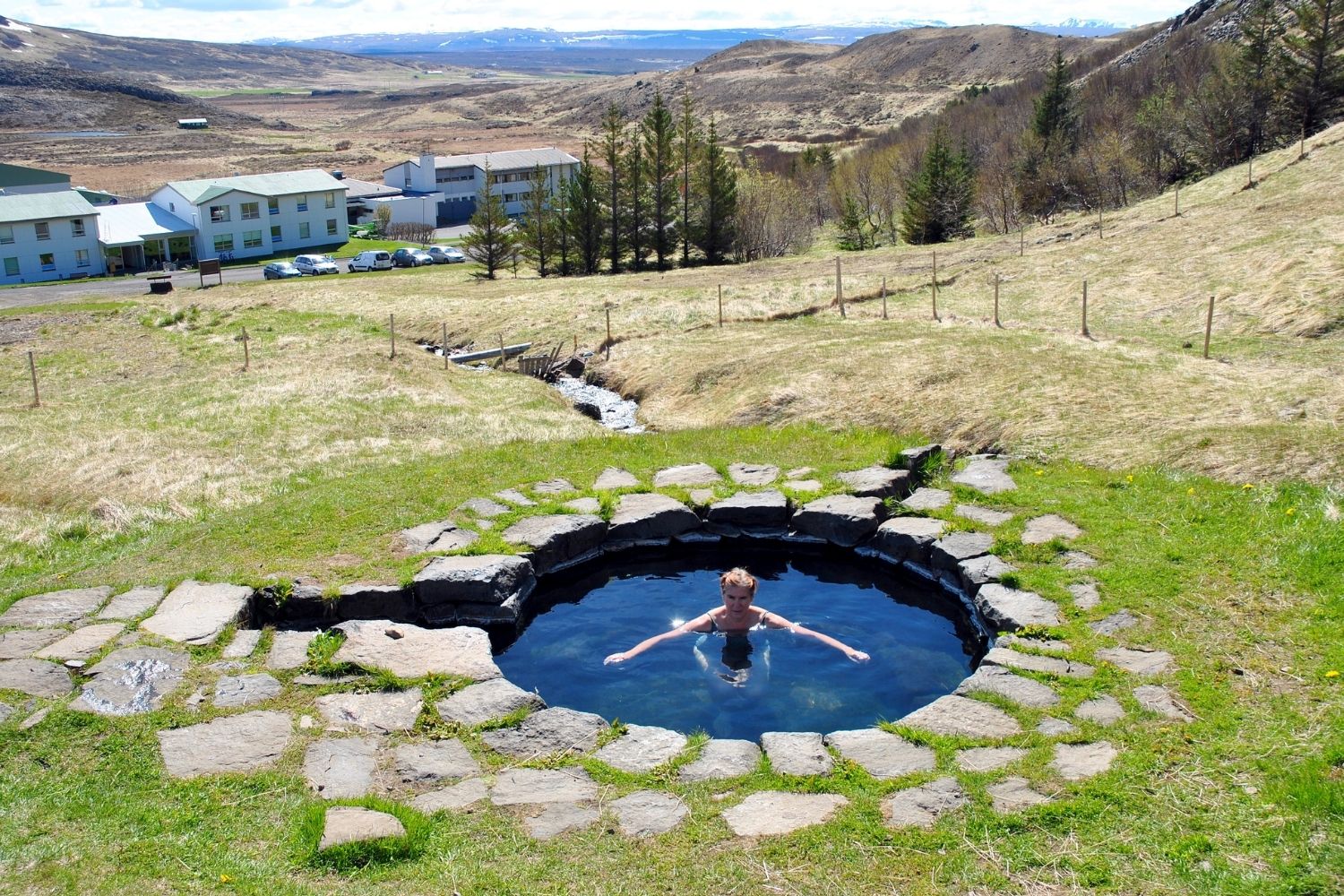
Gudrunarlaug is one of those under-the-radar Iceland hot springs that rewards the curious traveler. Located in western Iceland in an area steeped in Viking saga history, this small pool was rebuilt in 2009 after a mudslide destroyed the original. It comfortably fits six to eight people and sits in beautiful open countryside, well off the main tourist circuit.
There’s no entrance fee, and small changing rooms are available nearby. It’s a genuinely authentic Icelandic hot spring experience — no spa branding, no swim-up bar, just warm mineral water and the landscape around you.
Landbrotalaug Natural Hot Spring
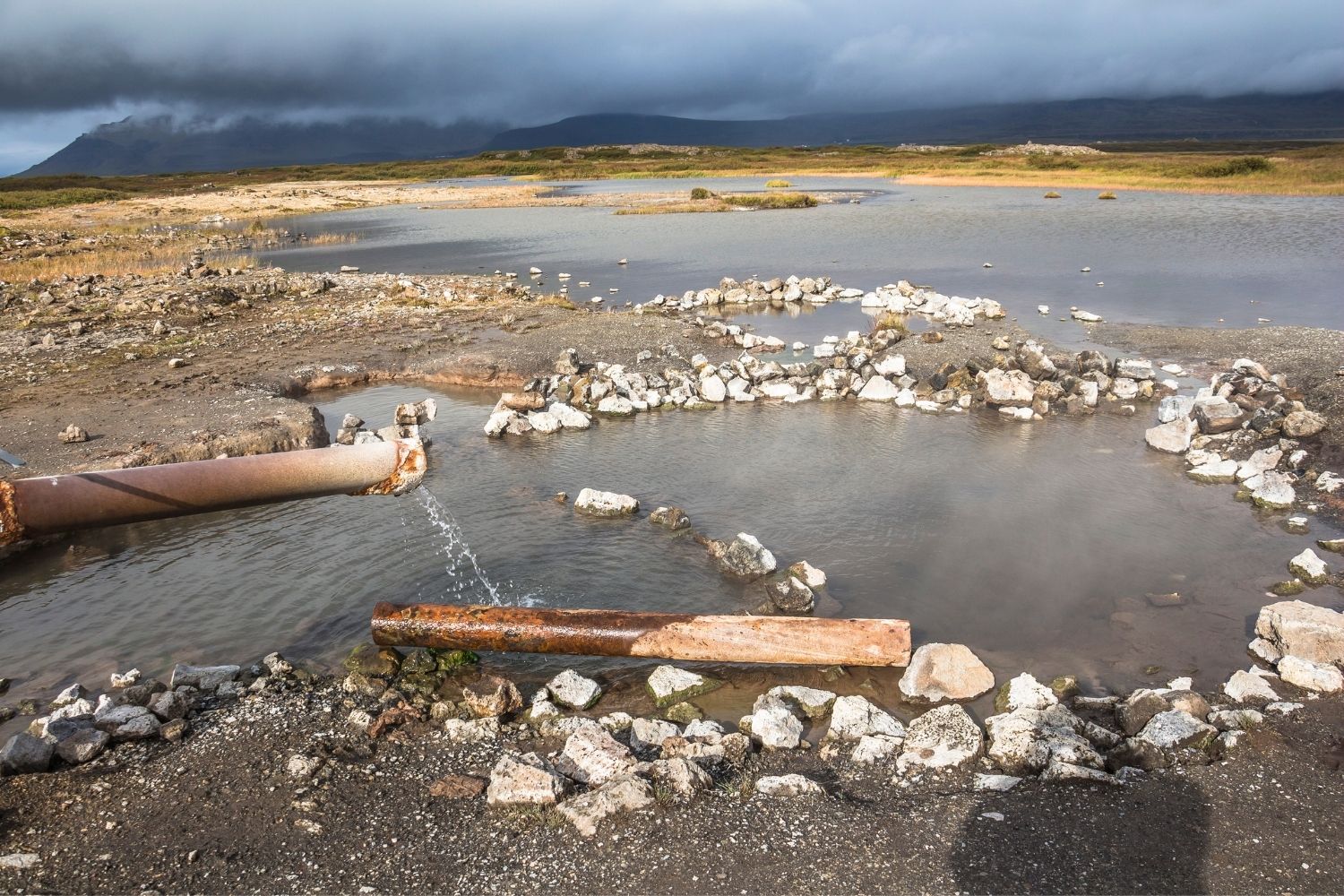
Landbrotalaug is a micro hot spring — and we mean micro. Comfortably fits two people, three at an absolute stretch. It’s located under two hours from Reykjavik, just past Eldborg lava crater and before the Snæfellsnes peninsula, and Google Maps has it pinned correctly despite the remote location.
The appeal here isn’t the size but the intimacy: it’s hidden, it’s free, and on a quiet morning you can have a naturally heated outdoor soak entirely to yourself. Just be warned that timing matters — arrive at the wrong moment and you may find the pool occupied with no intention of vacating. Best treated as a spontaneous stop if you’re already driving past rather than a destination in itself.
Stóragjá

Stóragjá is one of the most visually stunning Iceland hot springs, and also one of the most physically demanding to access. Located near the village of Reykjahlíð by Lake Mývatn, reaching it involves squeezing through a narrow lava ravine and descending into a cave using ropes and footholds cut into the rock. When you get there, the reward is a cave pool of astonishingly clear blue water.
Temperatures here are technically within the tolerable range for bathing, but can spike uncomfortably hot, so bathing is discouraged. Most visitors come to see it rather than soak. It’s often overlooked in favor of the better-known Grjótagjá nearby — which makes it feel like a genuine find.
[Google Maps Location]
Hoffell Hot Tubs

- Website: GlacierWorld
Hoffell Hot Tubs are a Ring Road highlight near the town of Höfn in southeast Iceland, close to Vatnajökull glacier. Once a self-service, honor-system operation, they’re now run by Glacier World and priced accordingly — but the setting is still wonderful. Natural hot tubs surrounded by open Icelandic landscape, with glacier views on a clear day.
Booking accommodation with Glacier World includes admission to the tubs, which makes the pricing feel more reasonable. If you’re driving the Ring Road east, this is well worth factoring into your itinerary.
[Google Maps Location]
Fosslaug Hot Spring
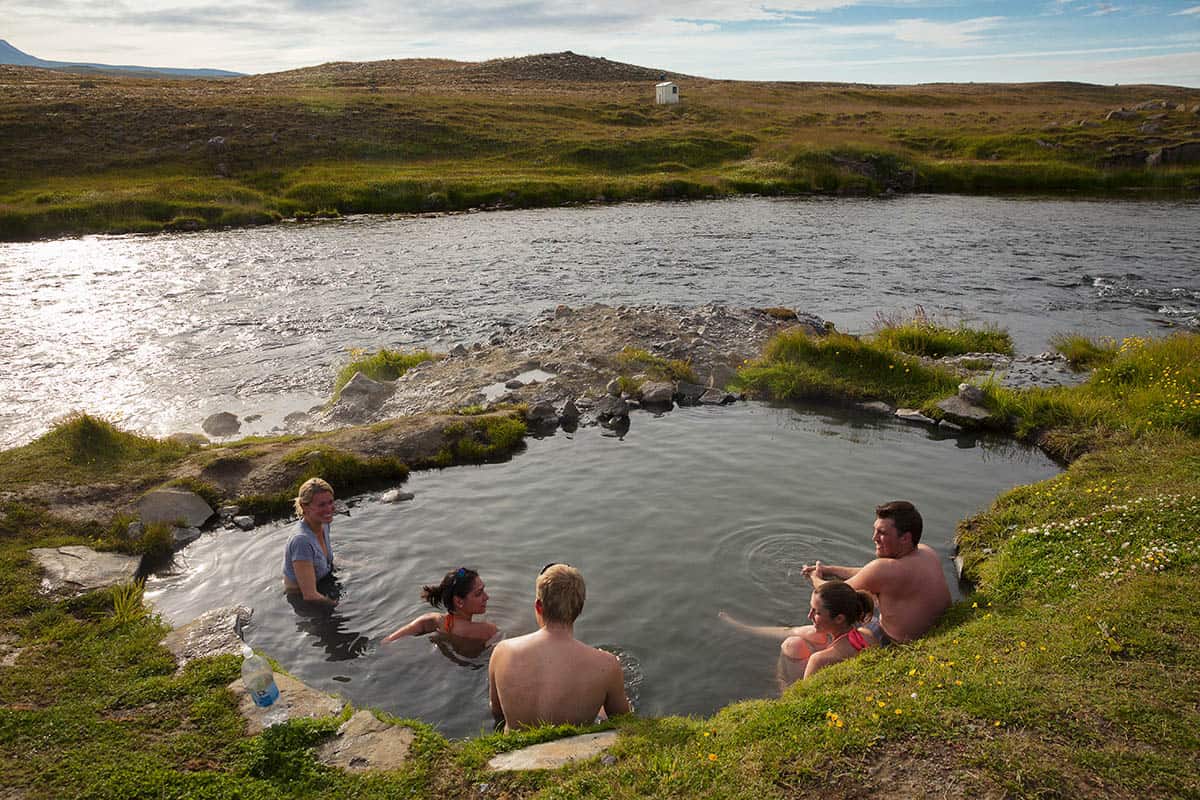
Fosslaug is one of those Iceland hot springs that feels like a proper discovery. Entirely natural, it sits right next to the Reykjafoss waterfall and the Húseyjarkvísl River in northern Iceland — the contrast between the ice-cold river and the warm geothermal pool is part of what makes a visit here memorable.
To find it: head to Varmahlíð, then navigate to the dirt parking area at coordinates 65.499222, -19.379944. Pass through the pedestrian gate, follow the path toward Reykjafoss, and cross the bridge just past the waterfall. Over the small grassy hill and you’re there. The extra effort keeps the crowds down.
[Google Maps Location]
Mývatn Nature Baths
- Website: Myvatn Nature Baths
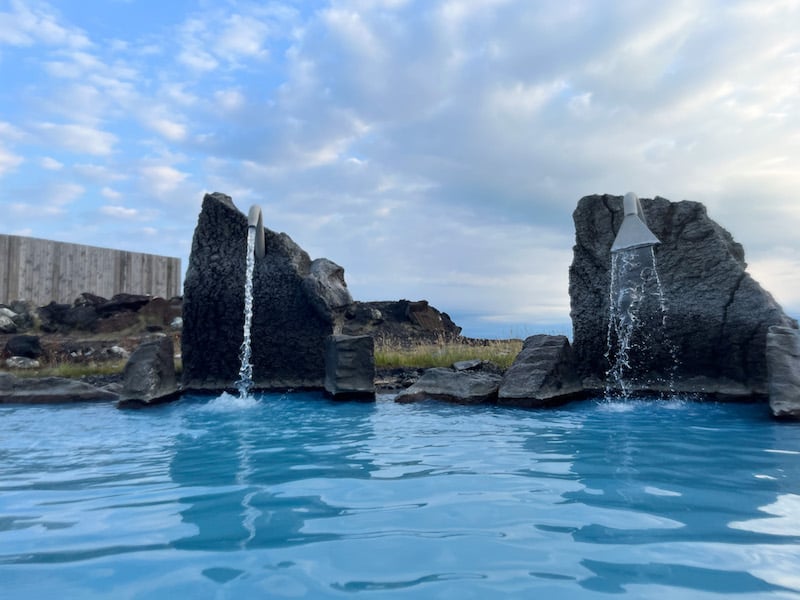
Earth Lagoon is North Iceland’s answer to the Blue Lagoon — the same silky, milky-blue geothermal water, but a fraction of the crowds and at a more accessible price point. Water temperatures are maintained between 36–40°C, cooled down from the source temperature of 130°C.
The setting near Lake Mývatn is spectacular in any season, but winter is particularly special: snow-covered lava fields surround the lagoon, and the northern lights are regularly visible overhead. Being in a less-traveled corner of Iceland only adds to the appeal.
[Google Maps Location]
Laugarvatn Fontana Hot Springs
- Website: Laugarvatn Fontana Hot Springs
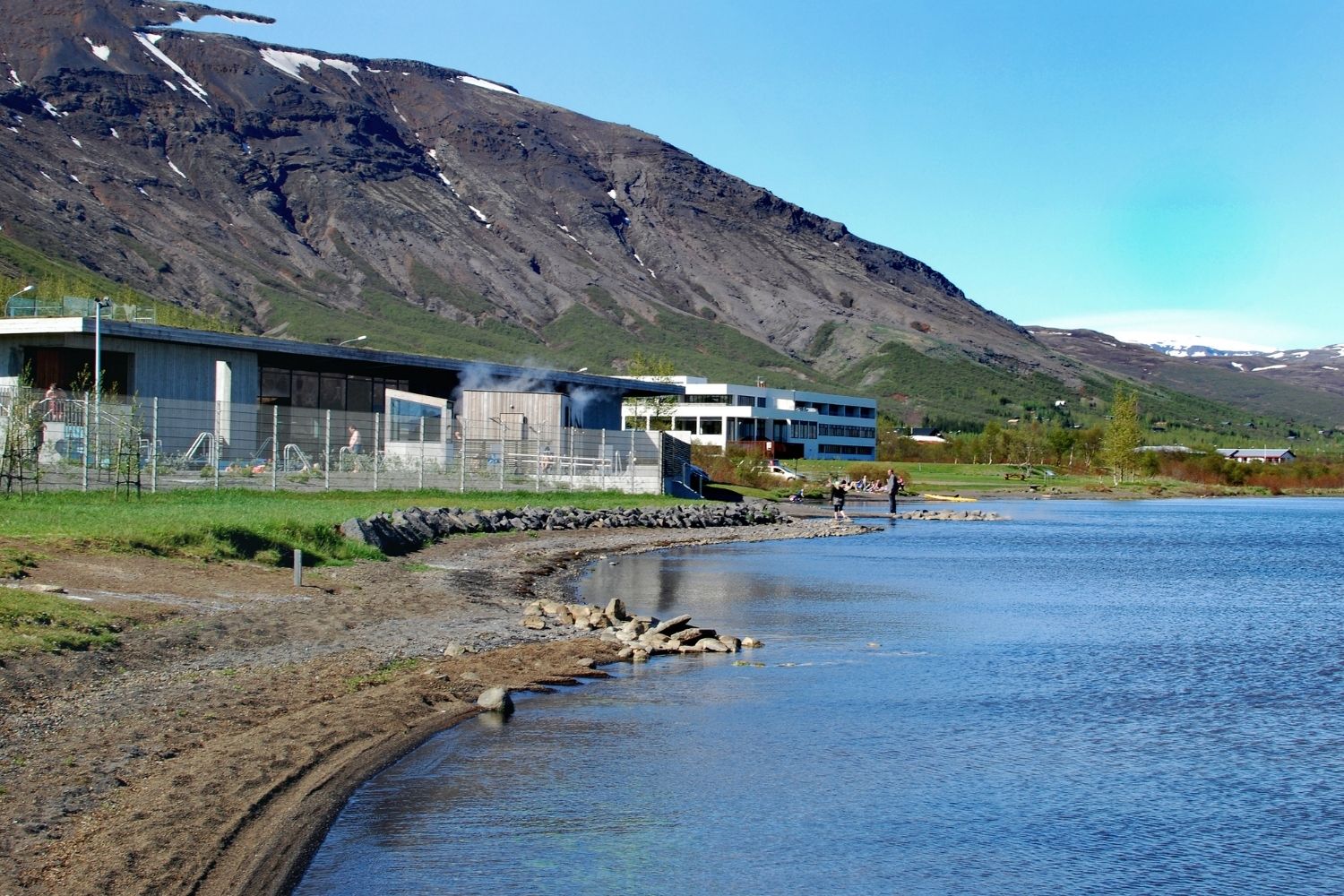
Positioned on the Golden Circle between Þingvellir and Geysir, Laugarvatn Fontana is the ideal mid-route stop on Iceland’s most popular day trip circuit, The Golden Circle. The spa sits on the shores of Lake Laugarvatn with a mix of geothermal pools at different temperatures — from warm and gentle to proper hot tub heat — plus a lakeside cold plunge option.
The standout experience here is the geothermal bread: traditional rye bread baked by burying the dough in geothermally heated sand, then pulled out and served with Icelandic butter. It’s the kind of thing that sounds gimmicky but tastes genuinely excellent.
[Google Maps Location]
Laugavallalaug Hot Waterfall
- Location: Eastern Highland region (GPS)
Most visitors to Iceland’s Iceland hot springs are familiar with pools and lagoons — but a hot waterfall is something else entirely. Laugavallalaug, in the remote Eastern Highlands, features a natural geothermal waterfall that pours directly into a soaking pool below.
Reaching it requires a rugged 4WD vehicle to navigate a seven-kilometer rough road, followed by a short 200-meter hike. Alternatively, you can hike the full route. The remoteness means few people make it here, which makes the payoff all the more worthwhile. One for the adventurous traveler who’s already seen the classics.r
Kvika Foot Bath
- Location: Near Grótta Lighthouse, Seltjarnarnes, Reykjavik (GPS)
Not every Iceland hot spring needs to be a full soaking experience. The Kvika Foot Bath near the Grótta Lighthouse is a small, geothermally heated basin — only deep enough for your feet — set against open coastal views of the sea and distant mountains. Water reaches up to 39°C.
It’s free, it’s always open, and it’s one of the best spots in greater Reykjavik for watching the midnight sun or catching the northern lights. Worth a stop if you’re exploring the Seltjarnarnes peninsula.
Hveravellir Hot Spring

- Location: Central Highlands (GPS)
- Website: Hveravellir Hot Spring
Hveravellir sits deep in Iceland’s central highland interior, in a nature reserve widely considered one of the most pristine natural areas in all of Europe. The hot spring lagoon here is flanked by two of Iceland’s largest glaciers and surrounded by lava fields, active fumaroles, and bubbling geothermal vents.
Access requires an F-road-capable 4WD and is only possible in summer. The remoteness and the extraordinary landscape make this one of the most memorable Iceland hot springs for those willing to make the effort — it’s an entirely different experience from the spa-style pools near Reykjavik.
Krauma Spa
- Location: Deildartunguhver, 320 Reykholt (GPS)
- Website: Krauma Spa
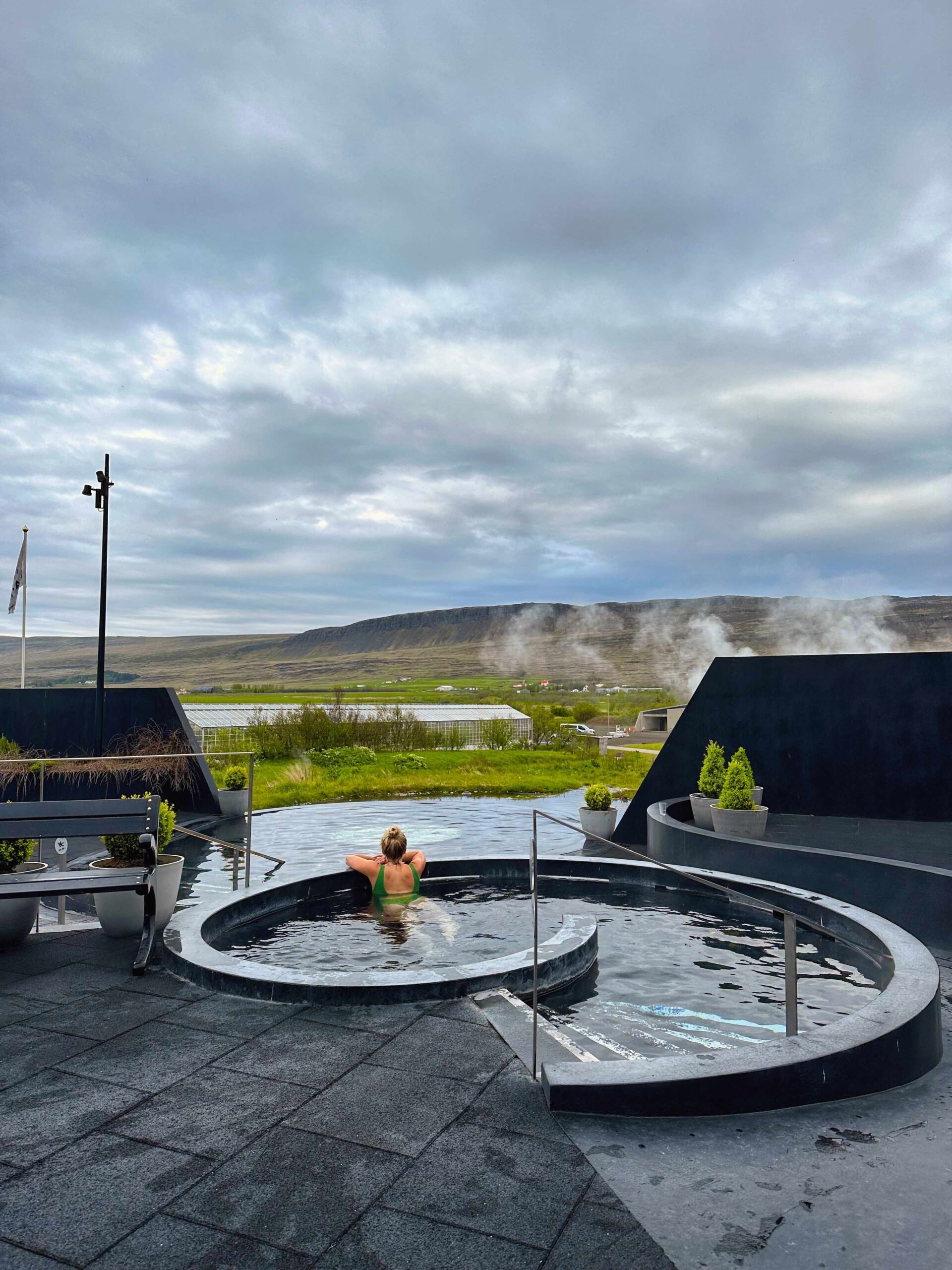
Krauma is positioned directly beside Deildartunguhver — the most powerful hot spring in Europe — in western Iceland, about an hour from Reykjavik. The geothermal water is so hot at the source that it has to be blended with cold glacial water before entering the six marble soaking pools.

Despite the proximity to the capital, Krauma stays remarkably quiet — we arrived at 7pm on a summer evening and had the place nearly to ourselves. The cold plunge and 40°C pool combination is excellent for contrast bathing, and on-site saunas and a restaurant round out the experience. Alcoholic drinks can be purchased from the indoor bar and brought poolside. A genuinely underrated spa.
Hreppslaug Hot Spring

- Location: Skorradalur Valley, 311 Borgarnes (GPS)
- Website: Hreppslaug Hot Spring
Built in 1928, Hreppslaug is one of the oldest geothermal pools in Iceland still in operation, and it’s now protected by the Cultural Heritage Agency of Iceland. It sits in the quiet Skorradalur Valley of western Iceland — two hot pools, changing rooms, showers, and not much else.
That’s the appeal. No luxury spa branding, no crowds, no cocktail menu — just warm water, genuine history, and beautiful valley surroundings. Recently renovated facilities mean the basics are comfortable, even if they’re minimal.
Hrunalaug Hot Spring
- Location: Sólheimar, 846 Flúðir (GPS)
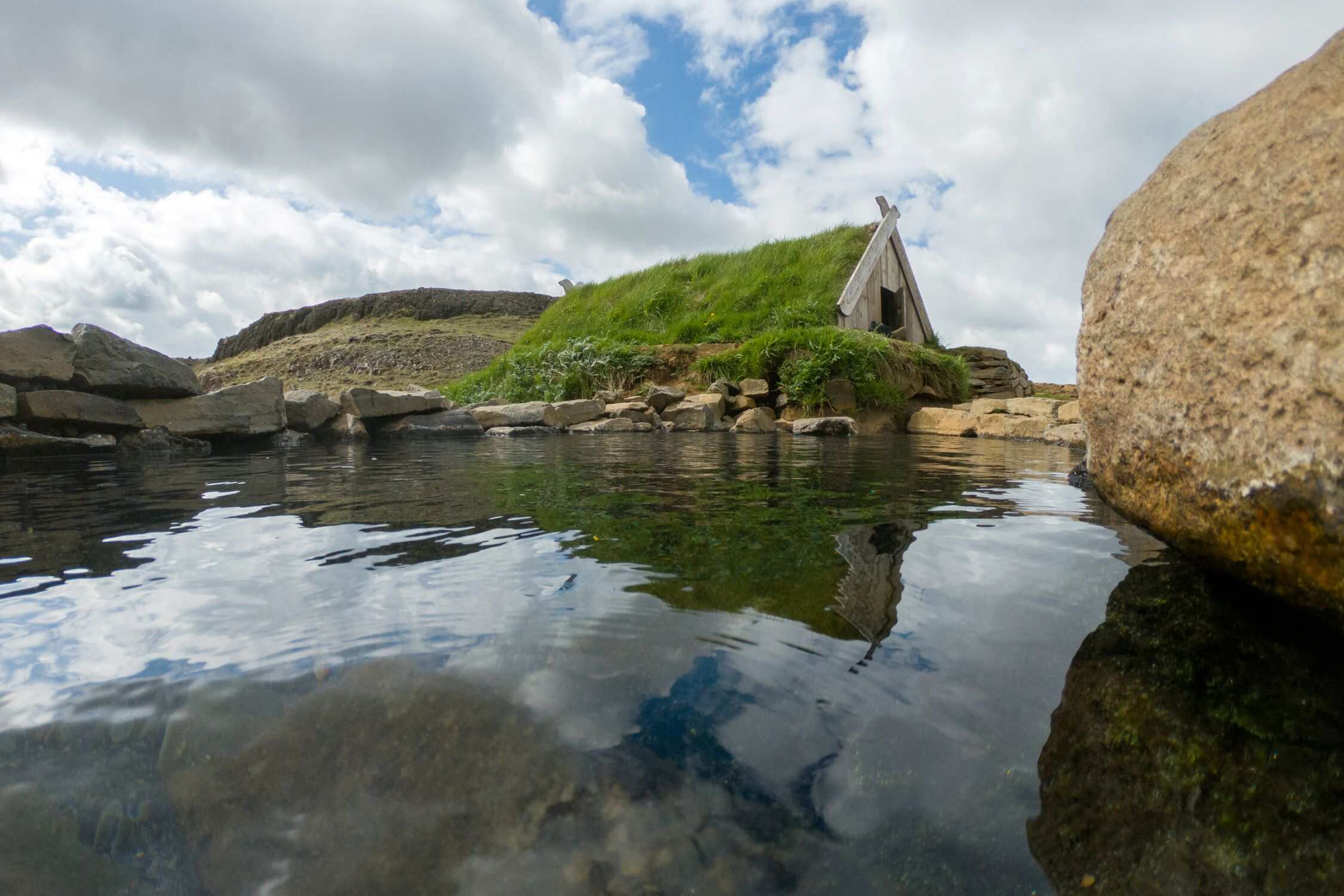
One of the most charming small Iceland hot springs, Hrunalaug sits on private farmland near Flúðir, surrounded by stone walls and native vegetation. The landowner welcomes respectful visitors, and access is maintained through donations. Treat it accordingly.
The pool itself is small but beautifully warm, and the natural setting is the draw — there’s nothing artificial about it. Interestingly, the pool was historically used to wash sheep. Today it’s for humans only, and considerably more pleasant for it.
Hellulaug Hot Spring

- Location: Near Flókalundur, Westfjords (GPS)
- Website: Hellulaug Hot Spring
Hellulaug is one of the best reasons to make the journey to the Westfjords — Iceland’s most remote and dramatically beautiful region. The small geothermal pool sits right alongside the road at 38°C, almost invisible to passing drivers who don’t know to look for it. Sea access is nearby for a bracing cold plunge afterward.
Hljomskalagardur Wading Pool
- Location: Central Reykjavik, near Lake Tjörnin (GPS)
A 30-centimeter-deep geothermally heated wading pool in one of Reykjavik’s loveliest parks — right next to Lake Tjörnin in the city center. Designed with young children in mind, it’s also perfectly pleasant for adults who just want to soak their feet in warm mineral water while the kids splash around.
It’s free, it’s central, and it’s a nice introduction to Icelandic geothermal culture for families visiting the capital.
Landmannalaugar Hot Spring
- Location: Iceland Highlands (GPS)
Landmannalaugar is one of the most extraordinary landscapes in Iceland — a highland valley of obsidian lava fields, rainbow-colored rhyolite mountains, and natural geothermal pools warm enough to soak in. It’s the starting point for the famous Laugavegur hiking trail and a destination in its own right.
The natural hot spring pool here is modest — no facilities, no admission fee — but the setting makes it one of the most memorable Iceland hot springs experiences on the entire island. Access requires a 4WD capable of river crossings; the route is only open in summer. Well worth planning around.
Viti Crater, Askja
- Location: Askja, Eastern Iceland (GPS)
Created by a major volcanic eruption in 1875, the Viti Crater in the Askja caldera contains a geothermal lake that reaches around 30°C — warm enough to swim in under the right conditions. It’s a surreal experience: swimming inside an active volcano in the middle of Iceland’s lunar-like highland interior.
Important caveats: water temperatures vary significantly across the crater and can reach dangerous levels in certain spots. Always check current conditions before entering, follow all posted warnings, and be aware that access requires a 4WD and a substantial drive into the highlands. Askja is only accessible in summer.
Krossneslaug Hot Spring

- Location: 524 Árneshreppur, Westfjords (GPS)
- Website: Krossneslaug Hot Spring
Krossneslaug is about as remote as geothermal pools in Iceland get. The long gravel road to reach it is part of the experience, gradually stripping away the sense of civilization until you arrive at a small coastal pool fed by mountain springs, with open ocean views and almost no one else around.
The remoteness is genuinely part of what makes it special. If you’re already exploring the Westfjords, the drive is absolutely worth it.
Kerlingarfjöll Hot Spring
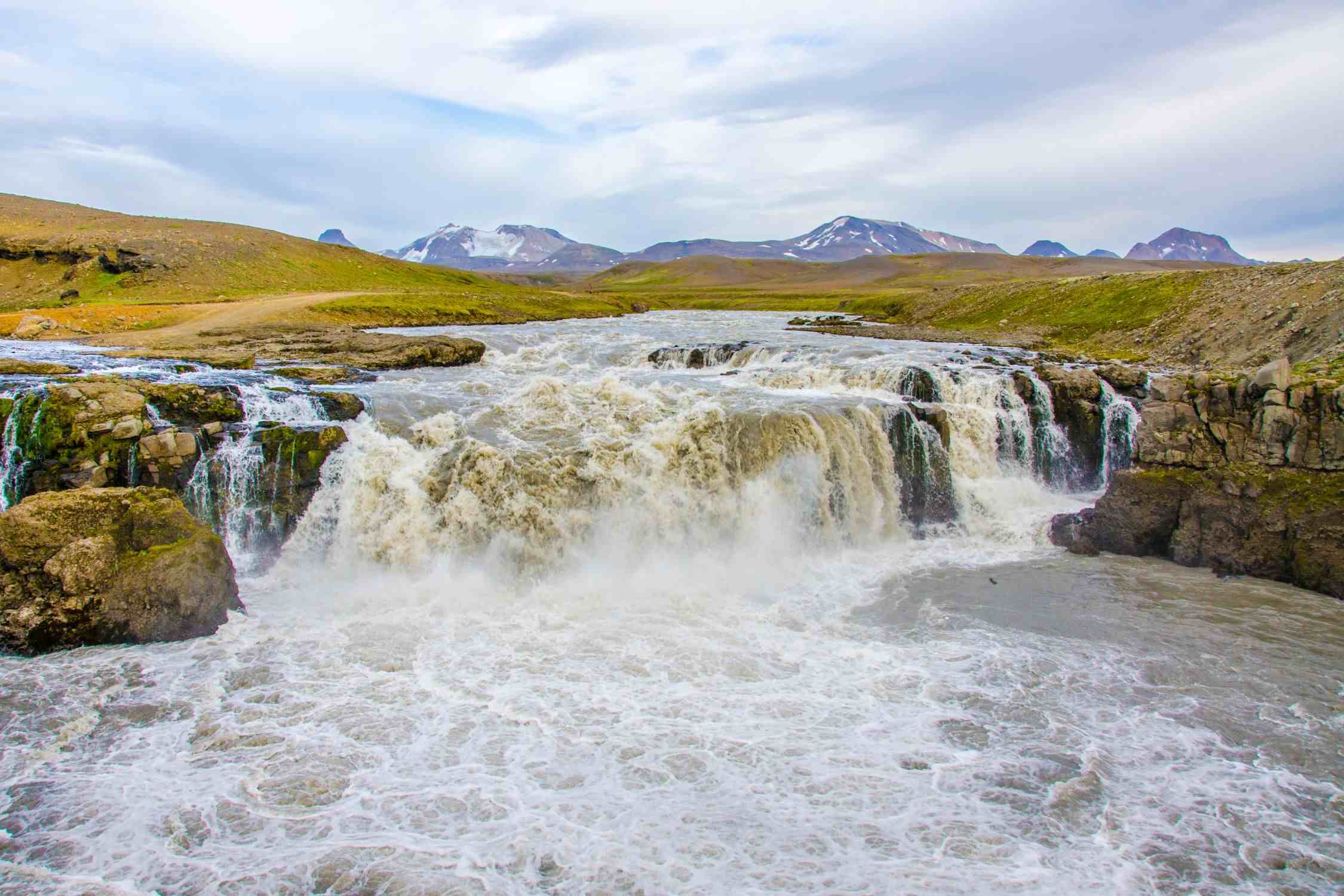
- Location: Iceland Highlands
Set between two mountains in the Iceland Highlands, Kerlingarfjöll Hot Spring sits in an area of intense geothermal activity with steam vents and colorful mineral deposits everywhere around you. The water here has an unusually high iron content, which gives it a distinctive character and reportedly benefits those with low iron levels — though anyone can enjoy the soak.
Facilities at the hot spring itself are minimal, but a resort nearby provides comfortable accommodation if you want to spend more time exploring the area.
Geysir
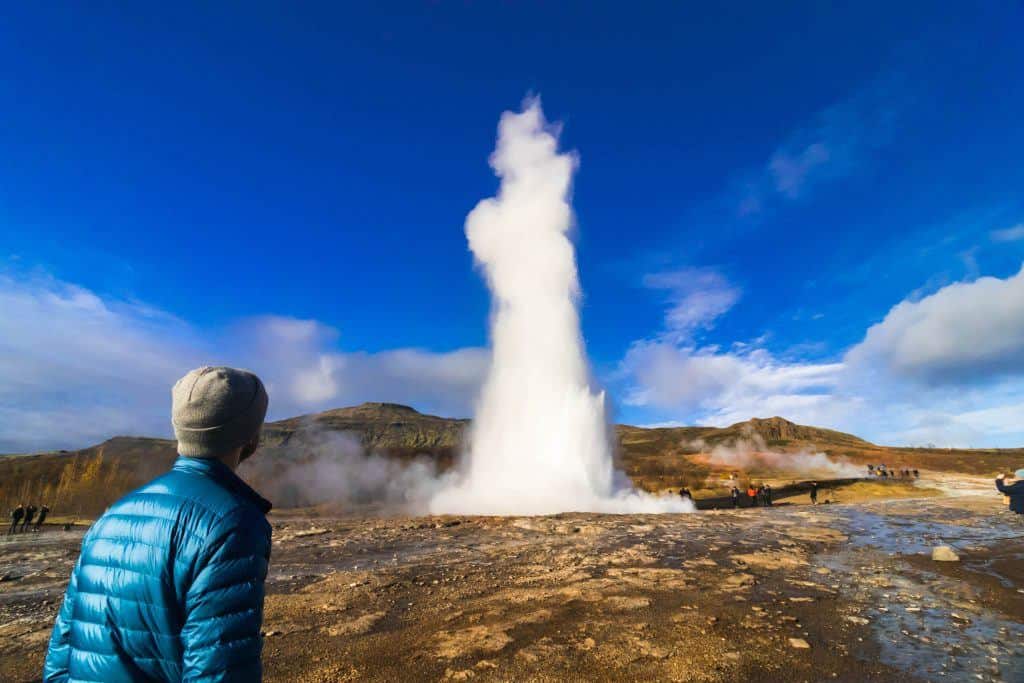
- Location: Golden Circle
- Note: Not suitable for bathing
Geysir is the hot spring that gave all geysers their name — and while it’s currently dormant, the surrounding geothermal field is very much alive. Strokkur, a smaller geyser nearby, erupts every 5–10 minutes to considerable height, and the surrounding pools steam and bubble at temperatures approaching 100°C.
This is a spectacular Iceland hot springs area to see rather than soak in. Follow all posted signs and barriers carefully — the ground itself is dangerously hot in places. Bring a camera.
Nautholsvik Hot Spring
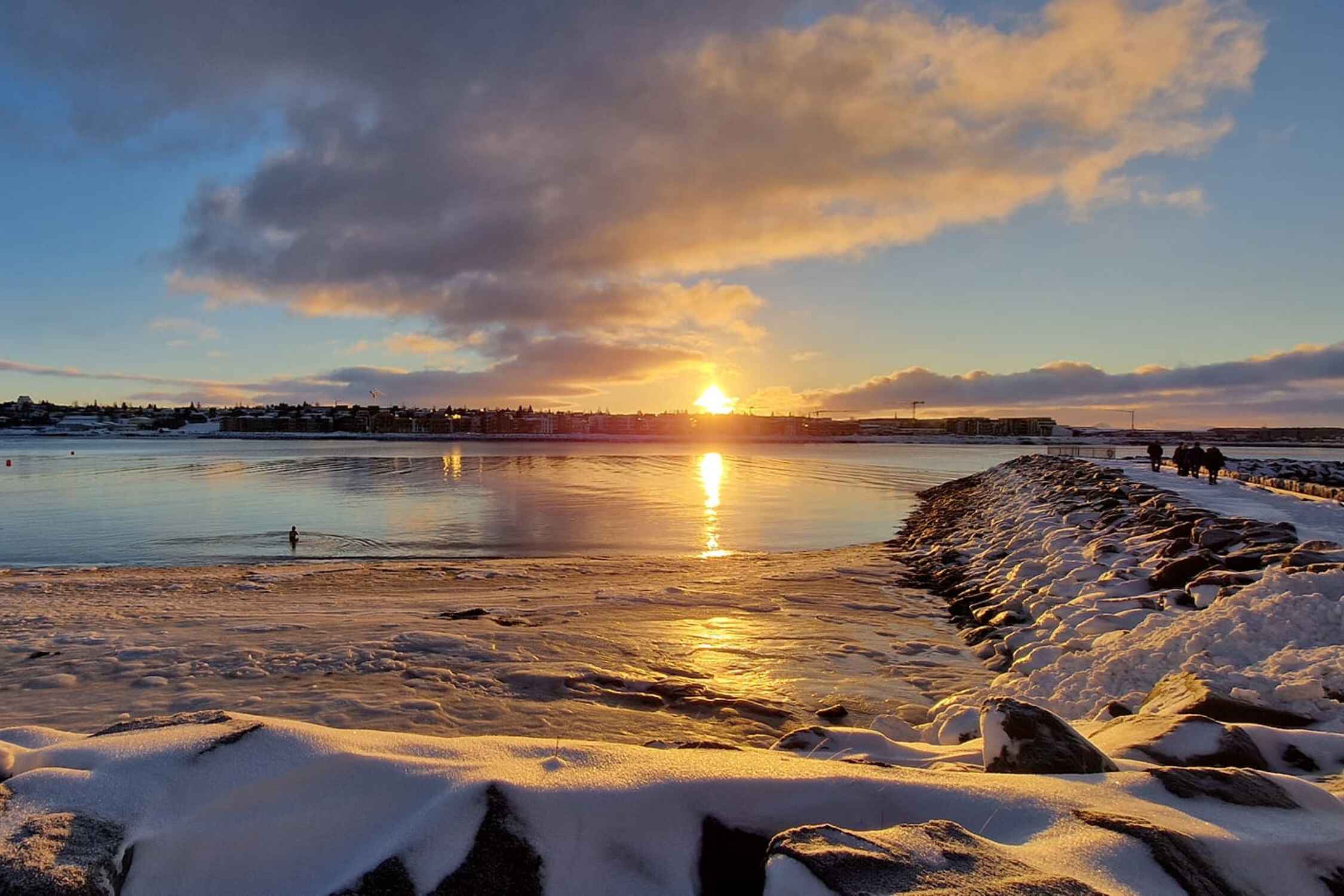
- Location: Nauthólsvegur, 101 Reykjavík
- Website:Nauthólsvík
Nauthólsvík is one of the more unusual Iceland hot springs experiences — a geothermally heated beach on the outskirts of Reykjavik. The setup includes a hot tub at the sea’s edge (~35°C), a shallow warm pool, a sauna, and a café, all with a golden sand beach between you and the North Atlantic.
Entry is free during summer. It’s a local favorite, particularly popular on warmer days when Reykjavik residents come to soak and sunbathe (by Icelandic standards). A great off-the-beaten-path Reykjavik activity.
Grjotagja Hot Spring

- Location: Near Lake Mývatn, north Iceland
Grjótagjá is a lava cave containing a strikingly beautiful geothermal pool — famous among Game of Thrones fans as a filming location. The water glows an ethereal blue in the cave’s interior, making it one of the most photographed Iceland hot springs despite the fact that bathing is no longer safe or permitted.
Water temperatures have been rising for years and now regularly exceed 50°C. The cave is still worth visiting for the scenery — just come to look, not to soak.
GeoSea Sea Baths

- Location: Vitaslóð 1, Húsavík
- ‘Website:GeoSea
GeoSea is one of the best-positioned Iceland hot springs in the entire country. The infinity pools sit on a clifftop above Skjálfandi Bay in Húsavík — Iceland’s whale watching capital — looking out toward the Arctic Ocean and the distant mountains. On a clear evening, you might see a whale surfacing in the bay below while soaking at 37°C.
What makes GeoSea distinctive is the water source: it’s heated seawater rather than freshwater spring water, which means it’s naturally rich in sea minerals and salt. No chemicals needed. The salt content also means the water feels slightly different on skin — silkier, more buoyant. On-site changing rooms, towel rental, and a bar.
Iceland Hot Springs FAQ
What are the best Iceland hot springs near Reykjavik?
The best Iceland hot springs near Reykjavik include Sky Lagoon (15 minutes), Hvammsvik Hot Springs (45 minutes), Krauma Spa (1 hour), and the free natural soak at Reykjadalur (40 minutes by car plus a short hike). For something closer still, the Kvika Foot Bath and Nauthólsvík beach are both within the city limits.
What is the best time to visit Iceland hot springs?
Early morning or late evening consistently offer the best experience — fewer crowds, better light, and in winter, the best northern lights visibility. Midday is the busiest period, particularly at popular spas. That said, the hot springs are open and enjoyable year-round. Winter visits offer northern lights and snow; summer offers the midnight sun and longer operating hours.
Are Iceland hot springs free?
Some are, some aren’t. The best free Iceland hot springs include Reykjadalur, Hrunalaug, Gudrunarlaug, and Kvika Foot Bath. Developed spas like Sky Lagoon, Krauma, Vök Baths, Forest Lagoon, and GeoSea charge admission — typically between 3,000–7,000 ISK depending on the facility.
Do you need to shower before entering Iceland hot springs?
Yes — showering before entering is mandatory at all public pools and hot springs in Iceland, and you’re expected to shower without your swimsuit on using soap. It’s a firm cultural norm and strictly enforced at commercial facilities. Most people are used to it and no one thinks anything of it. The only place we’ve seen an exception is the Blue Lagoon as it’s geared to American tourists.
Can you swim in hot springs in Iceland?
The hot springs and geothermal spas are primarily for relaxing and soaking rather than lap swimming. If you want to swim proper lengths, Iceland’s public swimming pools (sundlaugar) are excellent — every town has one, they’re very affordable, and the locals use them daily.
Are Iceland hot springs good for your health?
Many of Iceland’s geothermal hot springs are rich in minerals including silica, magnesium, sulfur, calcium, and lithium. Regular soaking has documented benefits for skin conditions, muscle recovery, circulation, and stress reduction. The heat itself promotes relaxation of muscle tissue, which is part of why post-hike soaks feel so restorative.
Is it safe to bathe in all Iceland hot springs?
Not all of them. Some, like Geysir, Grjótagjá, and Stóragjá, reach temperatures that are dangerous or unsuitable for bathing. At natural pools, always check the temperature with your hand before getting in — some geothermal water reaches boiling point. Follow posted signage at all times, particularly in geothermal areas.
Should you bring a towel to Iceland hot springs?
Yes — most Iceland hot springs, even those charging significant admission, don’t include a towel. Bringing your own is strongly recommended. A few premium spas (like Sky Lagoon and Hvammsvik) include towels in the ticket price, but it’s always safer to have your own.
How do I protect my hair at Iceland hot springs?
The mineral-rich water at certain spas — particularly the Blue Lagoon — can cause significant damage to hair. Soak your hair in conditioner before entering and keep it up and out of the water if possible. This is especially worth doing at silica-heavy spas.
Best Hot Springs in Iceland Maps

Iceland Hot Springs and Lagoons Tours Quick Book
- Reykjavik: Sky Lagoon Entrance Pass With 7-Step Spa Ritual
- Iceland Secret Lagoon Admission Ticket
- Husavik GeoSea Geothermal Baths Entrance Ticket
- Vök Baths: East Iceland Geothermal Baths Entry
- Myvatn Nature Baths Admission Ticket
- 1-Hour Helicopter Tour in Iceland: The Geothermal Tour
- Husafell Canyon Baths Soak with short Highlands Hike
- Laugarvatn Fontana Geothermal Baths Entry Ticket
Plan For Your Trip
- Protect Your Trip: We don’t travel without travel insurance, nor should you. You never know what can happen while traveling, so it’s best to be prepared. HeyMondo provides excellent short-term and long-term travel insurance plans.
- Find Cheap Flights: Sign up for Going (formerly Scotts Cheap Flights) to get notified when prices get low.
- Book a Rental Car: We use Discover Car to book all our rental cars! You can also read our top tips for renting a car abroad here.
- Travel Adapter: Make sure you find a good adapter to keep your personal electronics charged. Otherwise, you may be paying for a cheap one once you land. Purchase one here.
- Travel Backpack: We like the Nomatic Travel Backpack for our travels. Check the price here.
- Our Favorite Travel Shoes: Our answer to this question is always Allbirds! Check them out on their site!
- Get a Travel Credit Card: We travel worldwide for free because we have leveraged our spending into points. See how you can do the same with our favorite travel credit cards.


Brilliant guide!
We were looking into doing a two-weeks round trip in Iceland with a camper-van in September. Mývatn sounds like the ultimate secret gem!
I wrote a few things down for our trip so thanks for sharing guys!