
Nusa Penida Travel Guide: Everything To Know

After three weeks in Bali, we were tired of the crowds and wanted more beaches, bigger views and a rougher edge. We found all of it less than an hour away on Nusa Penida. Nusa Penida, Nusa Lembongan and Nusa Ceningan make up the Nusa Islands, and Penida is the largest, wildest and most dramatic of the three.
Think of it as a rugged, less crowded version of Bali: turquoise water, huge sea cliffs, hidden coves, white-sand beaches and viewpoints that look photoshopped until you’re standing on them. It has also changed a lot. The island is busier, better equipped and more developed than when we first arrived, and the popular spots now fill with day-trippers by late morning.
This guide covers everything we’d want to know before going: how to get there, how to get around, where to stay, how to plan your days, every major sight, the safety issues you need to take seriously, and the practical tips that still hold up.
Nusa Penida at a glance

- Where: a short boat ride southeast of Bali
- Boat from Bali: about 30 to 45 minutes on paper, often 45 to 60 minutes in practice, plus time at the port
- Best for: dramatic scenery, cliff viewpoints, snorkelling with manta rays, and a rougher, more adventurous Bali add-on
- Time needed: 2 to 3 days is ideal; 1 day is possible but rushed
- Getting around: private driver or scooter; there is no public transport worth relying on
- Not for: anyone who wants polished resort infrastructure, nightlife or smooth roads
- Biggest warning: Kelingking Beach and Angel’s Billabong are genuinely dangerous; read the safety section before you go
How to get to Nusa Penida

Take a fast boat from Sanur, expect to pay roughly IDR 150,000 to 250,000 one way, and plan for the trip to take longer than advertised. Most operators sell tickets online now, so you can book ahead instead of haggling at the port.
Fast boat from Sanur
Sanur is the main departure point for tourists heading to Nusa Penida and Nusa Lembongan. Boats leave from early morning until mid-afternoon, and the last boats of the day often sell out, so book ahead if you’re travelling late.
Operators we know of include El Rey, Maruti Express, Arathmas, Mola Mola Express, Semabu Hills and Angkal, among others. Service levels are similar, and recent reviews mostly mention the same things: late departures, crossings that take longer than the advertised 30 to 45 minutes, and the occasional boat with weak air conditioning. Check which Nusa Penida port your ticket arrives at, because that decides how far you are from your hotel.
Other departure ports
- Padang Bai: vehicle ferries and some fast boats; useful if you’re coming from east Bali
- Kusamba: a shorter crossing with fewer operators, and it can land you closer to the east side of the island
What you’ll pay
- Fast boat, one way from Sanur: about IDR 150,000 to 250,000, depending on operator, season and departure time
- Island entrance fee: a per-person fee of IDR 25,000 is charged for Nusa Penida. Recent sources say it’s best paid online in advance rather than on arrival; confirm how it works when you book
- Hotel transfer add-on: booking through your hotel or a third party costs more but includes the transfer to the port and removes the port chaos
On our first trip the boat company quoted us 490,000 IDR one way, and we ended up paying about 100,000 by haggling through a broker. That era is mostly over. Operators now publish their own prices and compete on clear terms, so the only haggling left is for add-ons like transfers.
The slow local ferry
A slower local ferry also runs. It’s cheaper and takes around two hours, and it isn’t something we’d recommend. Even the tourist boats take a big chunk of your day, so adding another hour or more for the sake of a few dollars rarely makes sense.
Plan for delays
Our own crossing took almost four hours from start to finish, far longer than the advertised 45-minute ride. Most of it went on buying tickets, waiting for the boat, loading luggage and offloading into a smaller boat and a lorry on the other side. Recent traveller reviews describe the same pattern, with late departures and slower crossings than advertised. Leave a buffer if you have onward plans.
Boat-day tips
- Carry your shoes. On our boat the crew collected shoes before boarding to keep them dry and returned them in a pile on arrival. Cameron gave his up and later found them in a pile of mud, while Natasha kept her sandals with her and had a much better day.
- Expect wet feet. Boarding often means walking through knee-deep water, so keep valuables and electronics in a dry bag.
- Travel light. A suitcase is a pain on boats, sand and gravel. Leave it at your hotel in Bali if you can.
- Check the sea conditions. The waters between Bali and the Nusas can be rough, and people have died on both local boats and speedboats. Choose a reputable operator and make sure there are life jackets on board.
How to get around Nusa Penida

Hire a private driver if you only have a day or aren’t a confident rider, and rent a scooter if you have several days and real motorbike experience. Distances look short on a map but the roads are slow, steep and often broken, so a stop that appears “right next door” can take an hour to reach.
| Option | Typical cost (2026) | Best for |
|---|---|---|
| Private driver with car | IDR 550,000 to 900,000 per day | 1-day visits, groups, anyone nervous on a bike |
| Scooter rental | IDR 70,000 to 165,000 per day, fuel extra | Multi-day stays, confident riders, flexibility |
| Organised day tour | varies by operator and pickup | Short visits from Bali with no planning |
Scooter
A scooter gave us the freedom to move on our own schedule, and it was the best option for the days we spent on the island. When we visited, a day rental was 75,000 IDR, which was the going rate. Recent prices run from about 70,000 IDR for a basic scooter to around 165,000 for a larger model, and fuel is not included. Most rentals include two helmets.
You can rent as soon as you arrive. We rode with our bags on our backs straight to our guesthouse, which is another reason to travel with a backpack instead of a suitcase.
Be honest about your experience. Some of the roads are more like stretches of potholes and craters, and there are steep hill climbs and descents on loose gravel where it’s easy to lay the bike down. It’s the most common mishap for tourists across Southeast Asia. You’ll also share the road with fast-moving tour cars and trucks, and it gets worse when you end up on the same schedule as the day-trip crowds. Wear a helmet, ride slowly on descents, and get insurance if your rental offers it. If you’re a beginner, this is not the island to learn on.
Private driver
If you only have one day, a driver will get you to far more places. We were told 600,000 IDR was a good price for a day when we visited. Quoted prices now generally run from about 550,000 to 900,000 IDR for a car, depending on the operator, the hours and whether you book online. Most drivers know the best order to visit places and can save you from backtracking. Many speak basic English, and you can ask for a more fluent one when you book.
Navigation, parking and cash
- Maps: Google Maps works surprisingly well on the island. Download an offline map before you go.
- Parking: expect small parking fees of around IDR 5,000 to 10,000 at the busiest spots.
- Cash: keep small notes for parking, entrance donations and warungs.
A note on timing
The west coast circuit (Kelingking, Broken Beach, Angel’s Billabong, Crystal Bay) is the most popular, and the tour traffic peaks between late morning and mid-afternoon. We found the earlier we arrived anywhere, the better the experience.
Where to stay on Nusa Penida

Stay in the northwest around Toyapakeh if you want the easiest first visit, and move to the west or east coast if you’d rather sleep close to the sights. Nusa Penida has no real neighbourhoods and no central hub, so your choice mostly decides how long you’ll spend on the road each day.
There are now hundreds of places to stay on the island, a huge change from the handful that existed when the Nusas first took off. Accommodation is often our biggest travel expense, and we found it cheaper and much easier to find a deal here than in Bali.
| Area | Good for | Trade-off |
|---|---|---|
| Northwest (Toyapakeh, Ped, Batununggul) | First-timers, easiest arrival, most restaurants and shops | Busiest and most developed part of the island |
| West (Crystal Bay) | Snorkelling, sunsets, quick access to Kelingking and Broken Beach | Day-tour crowds around midday |
| East (Atuh, Diamond Beach, Teletubbies Hill area) | Quieter stays, sunrise, fewer tourists | Longer drives from the main port and limited food options |
| Central and south | Jungle and remote cliff stays | Isolated; you need your own transport |
Our advice on choosing
- Short stay of 1 or 2 nights: stay in the northwest or at Crystal Bay so you spend less time driving.
- 3 or more nights: split your stay between the west and the east to cut back-and-forth driving.
- If you have a scooter: the east side’s quiet roads are easier to enjoy, but the descents are steep, so ride carefully.
- If you want a hot shower: ask before you book. We heard plenty of complaints about cold or salty water, especially at cheaper places.
- Check the hotel’s port. Make sure your boat arrives somewhere reasonable for where you’re staying.
A word of warning: monkeys around the Crystal Bay area will steal bags that smell like food, so keep your things close.
How many days you need and how to plan them

Three days is the sweet spot, two is enough for the big sights, and one day only works if you hire a driver and accept a rushed pace. We spent three days and travelled slowly, and still didn’t get to everything. We’d recommend four if you can spare them and want time for snorkelling, diving or hiking.
The island splits naturally into a west loop and an east loop. Doing one per day avoids a lot of backtracking.
If you only have 1 day
Pick the west loop. It has the island’s most famous views and is the easier day with a driver.
- Crystal Bay early, before the day-tour crowds arrive around midday
- Broken Beach and Angel’s Billabong (check the tide and swell first)
- Kelingking Beach viewpoint in the late afternoon
- Stay for sunset if you have a way back before dark and your boat time allows
If you have 2 days
- Day 1, west: the loop above, with time to snorkel at Crystal Bay
- Day 2, east: Pura Goa Giri Putri cave, Atuh Beach (aim for high tide), Diamond Beach, and Banah Cliffs for sunset
If you have 3 or more days
- Day 1, west: Kelingking, Broken Beach, Angel’s Billabong
- Day 2, east: Goa Giri Putri, Atuh Beach, Diamond Beach, Thousand Islands viewpoint, Banah Cliffs
- Day 3, sea and south: a snorkel or dive trip to Manta Point, then Peguyangan Waterfall and Crystal Bay if you still have energy
- Extra day: slow down, revisit your favourite viewpoint at a better time of day, or cross to Nusa Lembongan and Nusa Ceningan
Three rules for any itinerary
- Go early. The tour crowds peak from late morning through mid-afternoon at the popular beaches.
- Check the tides. Atuh Beach, Angel’s Billabong and the bays behave very differently at high and low tide. We showed up at Atuh at low tide and wished we’d planned for high tide.
- Don’t overpack the day. Twisting roads make everything slower than the map suggests, and rain can close access to some of the cliff paths.
The best things to do on Nusa Penida
The big three are Kelingking, Crystal Bay and Manta Point, but the quieter stops are what make the days feel like an adventure. Here’s what we’d put on the list, starting with the west coast.
West coast
Kelingking Beach and viewpoint

Kelingking is the spot that put Nusa Penida on the map. A ridge shaped like a T-Rex head drops into turquoise water, and it’s the highlight of the island for most people. We stayed for sunset on the ridge, and even after years of travel and plenty of overhyped sights, it took our breath away. Many places don’t live up to their photos; this one does.
You have two choices once you arrive: stay at the top and admire the view, or hike down to the beach.
- The hike: it’s steep, narrow and exposed, and takes about an hour round trip. Wear sneakers rather than sandals, bring water for the climb back up, and expect to see people struggling on the way up.
- The beach: it’s secluded and beautiful, but swimming is not safe because of the currents.
- The glass lift: a 182-metre glass elevator was being built here to replace the stairs, but authorities halted it in late 2025 and ordered it demolished, so the descent is back to the stairs.
- Safety: this is the most dangerous attraction on the island. Read the safety section before you decide to go down.
Go for sunset if you can, or go early to beat the crowds. Granted it’s always busy.
Broken Beach (Pasih Andus)

Broken Beach is a collapsed sea cave that now forms a natural stone arch, with a hidden turquoise lagoon framed by the cliff. It’s a short walk from Angel’s Billabong, so most visitors do the two together. The best view is from the clifftop, not the water, and the edges are unfenced in places, so watch your footing.
Angel’s Billabong
Angel’s Billabong is a natural tide pool on a rock shelf at the edge of the ocean, famous for the glassy, infinity-pool look when the water is calm. It can also be one of the most dangerous places on the island. Large waves can arrive without warning and sweep people off the rocks, and the rocks themselves are sharp and slippery, so wear water shoes.
Only consider going into the pool at low tide with calm seas, and only if a local guide or the staff on site say it’s safe. If conditions look rough, just enjoy the view and skip the swim.
Crystal Bay
Crystal Bay is a small bay with clear water, good for lounging, swimming and snorkelling. A few local stands serve fruit juiceds and Indonesian dishes, and there are loungers and beanbags you can rent. When we visited, they asked for 50,000 IDR for three hours, but we watched the family next to us get charged double, so be ready to negotiate.
The reef is impressive, and the bay is known among divers for mola mola (ocean sunfish) sightings in the cooler months, around mid-year. It also faces west, so it’s a good place for sunset.
Crystal Bay was our first stop on Nusa Penida and we were glad we made it before noon. After lunch, the day tours arrived and the bay filled with what looked like hundreds of people. Be there in the morning.
Palm Tree Lane

When we left Crystal Bay to escape the crowds, we kept going straight instead of turning left and found a long, paved road lined with towering palms and almost no traffic. It’s a fun place to stop for photos, and a good detour on the way out of Crystal Bay.
Peguyangan Waterfall
Peguyangan is a sacred site with a steep staircase down the cliffside to a temple and a waterfall that flows toward the sea. It’s physically demanding, especially the climb back up, and visitors should dress respectfully and wear a sarong. It’s far from most other sights, so it pairs well with a Manta Point trip.
East coast
Pura Goa Giri Putri cave
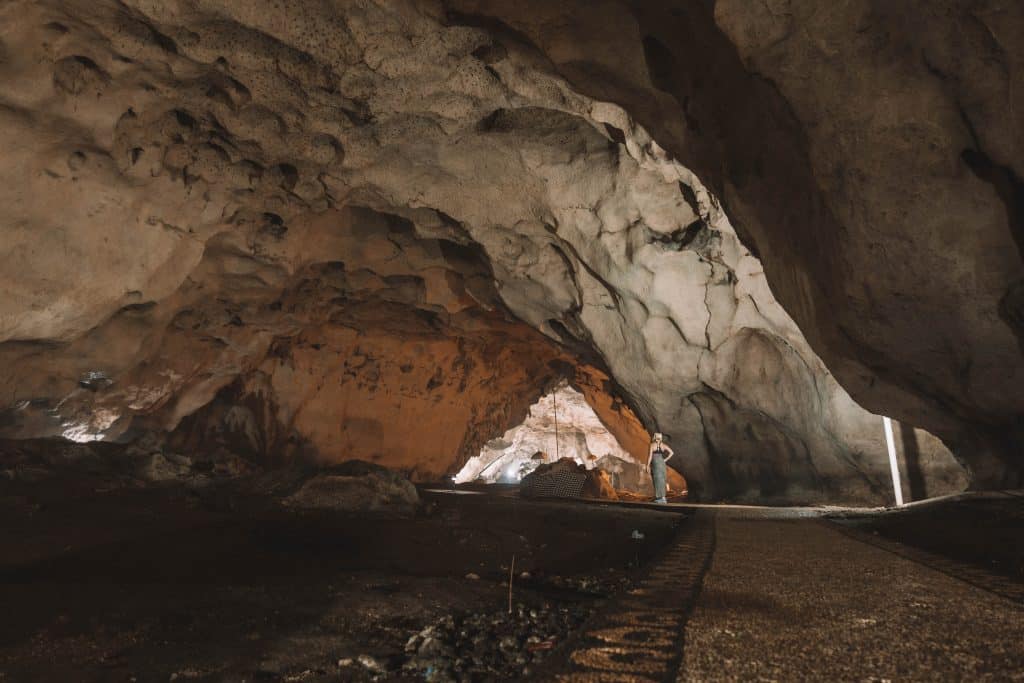
Pura Goa Giri Putri used to be a quiet stop, but it’s now popular. We stopped on our way to Atuh Beach with no expectations, and it turned out to be a refreshingly different stop between beaches and viewpoints.
The entrance is up a steep staircase, and you can’t go in without a sarong. Bring your own or rent one from the locals in the parking area for about 5,000 IDR. At the top you’re given a glass of water and asked for a donation of around 20,000 IDR per person.
The entrance is narrow and may feel claustrophobic for the first few metres, but then the cave opens into a huge space of around 300 metres. If you arrive during a prayer, you may catch a glimpse of local religious life. Please be quiet and respectful.
Atuh Beach

We continued from the cave to Atuh Beach. There are plenty of road signs, and the road is well paved. There are two ways in and both involve stairs. We took the “Stairway to Heaven”, which was far easier and less dangerous than the Kelingking stairs.
There weren’t many people when we visited, and the views were wonderful. We arrived at low tide and could walk out toward the impressive rock formation, but high tide is the better time to go if you want to get in the water. The beach is on the east side, so it gets little sun later in the day. A few small warungs rent beach loungers, which makes it a nice place to sit with a coconut.
Diamond Beach

Diamond Beach is a long stretch of white sand backed by tall white cliffs, reached by a staircase cut into the cliff face. It’s close to Atuh Beach, so the two pair well on the same day. Because the beach is on the east side, morning light is best.
The swing and flying fox that were set up here have been shut down more than once for lacking permits and safety checks, but the beach and the stairs remain open. Swimming here can be risky when the waves are big. Rip currents are also present I literally saved a woman who was not a strong swimmer along with the help or another visitor who was being pulled out to sea.
Thousand Islands viewpoint
This east coast viewpoint looks out over a scatter of small rock islets rising from the sea, and it’s a good stop between Atuh and Diamond Beach or on the way to Banah Cliffs. It’s best earlier or later in the day when the light is softer.
Teletubbies Hill
In the southeast, grassy rolling hills sit above the coast and look their greenest in the wetter months, hence the nickname. It’s a short, easy stop with open views, and works well for a break between the bigger sights.
Banah Cliffs
Banah Cliffs is another great sunset spot. The road isn’t suitable for cars, so you’ll need a motorbike or a driver who knows the route. Once there, you have wide views along the cliff face and, from some angles, the back side of Kelingking. Keep walking and you’ll find more viewpoints and an arch over the ocean.
We were lucky enough to see manta rays from above here. Be careful around the edge, because a wrong step here is game over.
In the water
Manta Point

Giant manta rays live in the deep waters around the Nusa Islands, and you can sometimes spot them from the clifftops. The most reliable place to see them in the water is Manta Point. It’s only reachable by boat, so you’ll need to book a snorkelling or diving trip. As with all wildlife, sightings are never guaranteed, but the odds are high.
We got our open water certification with Dive Concepts on Nusa Lembongan and did one of our last dives here. We saw three massive mantas swim through. We’ve seen mantas in the Galapagos and Mozambique, where they were shy and fast and swam away. Here they seemed used to the number of snorkellers and divers around them. Bring an underwater camera if it’s your first time. More on our diving in the Nusa Lembongan diving guide.
Snorkelling and diving more broadly
Crystal Bay, Manta Point and the waters around the three Nusa islands all offer good snorkelling and diving, with the biggest draws being manta rays year-round and mola mola in the cooler months. The water can be cold and the currents strong at some sites, so go with a reputable operator.
Safety on Nusa Penida

The main risks here are cliff falls, big waves on rock shelves, and scooter crashes. Most serious incidents involve people who ignored warnings, so none of this should stop you going, but all of it should shape how you plan.
Kelingking Beach stairs
Kelingking has been the site of repeated deaths and rescues. The stairs are steep, narrow and exposed, and people have fallen from the upper flights. Reports of the trail’s railings and condition differ, so treat any improvements as limited. The authorities have also ended the glass lift project that was meant to make access easier, so the hike is back to the stairs.
- Skip the descent if you’re unsure, afraid of heights, or it has been raining or foggy
- Wear proper shoes with grip and bring water
- Don’t take selfies near the edge, and never swim here; the currents are dangerous
- Take the descent early, not at sunset, so you have light and energy for the climb back up
Angel’s Billabong and cliff edges
Waves can surge across the rocks without warning. Stay well back unless the sea is calm, don’t turn your back to the ocean, and obey any guides on site. Broken Beach, Banah Cliffs and most viewpoints have little or no fencing, so stay behind the edge and keep children close.
Scooter safety
Tourist scooter crashes are the most common injuries on the island. Ride slowly on gravel, avoid steep descents in the rain, wear a helmet, and don’t ride at night. If you aren’t confident, hire a driver.
Sea and boat safety
Currents are strong at several beaches and diving sites, and not every beach is safe for swimming. Fast boats have had accidents, so choose a reputable operator and check that life jackets are on board.
Medical help and insurance
Medical facilities on the island are basic, and serious cases are usually transferred to Bali. We don’t travel without travel insurance, and we’d recommend the same here, especially if you plan to ride a scooter or hike down to Kelingking. HeyMondo is the insurance we recommend for short and long trips.
Where to eat on Nusa Penida

Expect family-run warungs serving Indonesian food, with a handful of cafés and viewpoint restaurants that are worth a stop. The island is far less varied than Bali, and the hip coffee shops and vegan cafés you’ll find there are few and far between here. We still had some great meals.
Our favourites:
- Vegan Soul Kitchen: our favourite find on the island. It’s far from the main road, so you’ll need a scooter or driver, and the payoff is a quiet spot with plenty of vegan food.
- Ogix Warung: a highly rated spot specialising in grilled fish and Indonesian dishes. It sits high above the ocean and is at its best around sunset.
- Penida Colada: we stopped for a quick coffee and stayed for the view. It’s a small café with international food, just steps from clear blue water.
- Sunny Café Penida: a good mix of local and international dishes.
- Mambo Beach Restaurant: a beach club and restaurant with a lovely atmosphere that hosts events.
- Sushi Island: Cameron was sceptical, but Natasha convinced him to try it, and it was shockingly good sushi for the price.
Few places on the island take cards, and menus change often, so bring cash and check current opening hours before you build a day around one of these.
Practical tips that still hold up

These are the lessons from our trip that we’d still pass on, updated where the island has changed.
Prices and money
- Nusa Penida costs more than Bali for many things. Everything arrives by boat, so food, scooters and activities often cost a bit more, sometimes at lower quality. Accommodation tends to be cheaper and easier to bargain for, so it roughly balances out.
- Bring cash. ATMs on the island are limited and sometimes out of order, and many small places only take cash. Withdraw what you need in Bali before you cross. Some larger hotels and tour operators now take cards, but don’t rely on it.
Packing
- Leave your suitcase in Bali. A backpack or duffel is far easier on boats, sand, gravel and the back of a scooter. We left ours with our hotel in Sanur for free.
- Bring what you can’t replace. Specialty medicine, electronics and beauty products can be hard to find. There are a few shops near the main port and in Toyapakeh, but we wouldn’t count on them for anything important.
- Water shoes and sneakers. Sneakers for Kelingking and the cave staircases, and water shoes for the rocky tide pools.
- A sarong. You’ll need one for the cave and the temples, though you can rent one on site.
- A dry bag and a power bank, especially on boat days.
- A buff or scarf. The roads get dusty on a scooter.
Time and place
- Go early. Crowds build from late morning, especially at Crystal Bay and Kelingking.
- Check the tides. High and low tide change Atuh Beach, Angel’s Billabong and some of the bays completely.
- Don’t trust distances. A short hop on the map can take an hour on the roads.
Comfort
- The island is still more rustic than Bali. It has developed quickly, largely because of viral photo spots, but you shouldn’t expect Bali’s polish. When we visited, finding a room with a hot shower was a struggle, and cold or salty showers are still common in budget places. Ask before you book if it matters to you.
- The roads can be exhausting. Book a massage when you’re back in Bali. Your back will need it.
- Drink only bottled or filtered water. Tap water in Indonesia isn’t drinkable. Bring a filter bottle, such as the Grayl GeoPress, and refill from large tanks where available to cut down on plastic. Indonesia has a serious plastic waste problem.
- Pack a plug adapter. Indonesia uses the Europlug, so a good universal travel adapter is worth bringing.
- Protect your face on a scooter. A buff helps with dust.
Nusa Penida, Nusa Lembongan or Nusa Ceningan?

Spend most of your time on Nusa Penida if you want scenery and adventure, and choose Nusa Lembongan if you want bars, surf, dive shops, pools and an easier, more developed base. Many travellers are short on time and wonder where to put their days, so here’s how the three compare.
| Island | Best for | Feels like |
|---|---|---|
| Nusa Penida | Cliffs, beaches, viewpoints, manta rays, road-trip adventure | Big, wild, spread out |
| Nusa Lembongan | Surf, diving, bars, restaurants, pools, an easy walkable base | Social, developed, compact |
| Nusa Ceningan | Quiet cliffs, small cafés, a low-key day trip or stay | Small and relaxed |
We spent ten days across the islands: three on Nusa Penida, one on Nusa Ceningan and five on Nusa Lembongan, where we took our open water dive course. If it weren’t for the course, we’d have spent more time on Penida than Lembongan. Penida is more adventurous and has far more to explore, while Lembongan is better for evenings out and relaxing.
All three islands are close together, so a day trip to Ceningan or Lembongan from Nusa Penida is easy. We recommend it. See our full guides to Nusa Lembongan, Nusa Ceningan and diving in Nusa Lembongan.
Tours and day trips worth booking
Book a guided trip for the things that are hard or unsafe to do yourself: reaching Manta Point, covering the island in one day, and getting transfers right. Everything else you can do on your own with a driver or scooter.
- Manta Point snorkel or dive trip: the only reliable way to see mantas in the water. Go with a reputable dive or snorkel operator, and book early in your stay in case weather cancels it.
- Private driver for the island: the easiest way to cover the west or east loop in a day without riding a scooter yourself.
- Day trip from Bali: workable if you only have one day, but expect a long, tiring day dominated by the boat.
- Fast boat tickets and hotel transfers: booking ahead avoids the port scramble and gets your transfer sorted.
Nusa Penida FAQ

How many days do you need on Nusa Penida?
Three days is ideal and two is enough for the highlights. A single day works only with a driver and a rushed pace.
Is Nusa Penida worth visiting?
Yes, if you like dramatic scenery and don’t mind rough roads and crowds at the famous spots. Go early and you’ll see why it became so popular.
Is Nusa Penida safe?
Mostly, but the risks are real: Kelingking’s stairs, big waves at Angel’s Billabong, unfenced cliffs, and scooter crashes. Follow the advice in our safety section and you can avoid most of them.
How do I get to Nusa Penida from Bali?
By fast boat, mainly from Sanur, with other departures from Kusamba and Padang Bai. Expect about IDR 150,000 to 250,000 one way and a trip that takes longer than advertised.
Do you need to be an experienced rider to rent a scooter?
Yes. The roads are steep and broken in places, and tour traffic is heavy. If you don’t ride confidently, hire a driver.
Can you do Nusa Penida as a day trip?
Yes, but it’s a long day. It’s largely vehicles on the same loop so you’ll be with the a bunch of drivers and visitors at all the same places at all the same time. A driver and a west-loop plan make the most of it, and an overnight stay is much more relaxed.
Are there ATMs and do places take cards?
There are a few ATMs, but they can be out of order, and many small places only take cash. Bring enough cash from Bali.
When is the best time to visit?
The dry season, roughly April to October, usually brings clearer skies and calmer seas. The rainy season makes roads and cliff paths slippery, and rough seas can disrupt boats. Mola mola sightings at Crystal Bay tend to peak in the cooler months mid-year, and mantas are seen throughout the year.
Should I stay on Nusa Penida or visit from Bali?
Stay at least one night if you can. The early and late hours are when the crowds thin out and the light is best.

